Apple Watch (1st generation)
Apple's first new category after the iPad, sold as jewelry and adopted as a fitness tracker. Slow, but the activity rings stuck.
Released April 24, 2015 · Discontinued September 7, 2016 · From $349 (38mm Sport), to $17,000 for the gold Edition
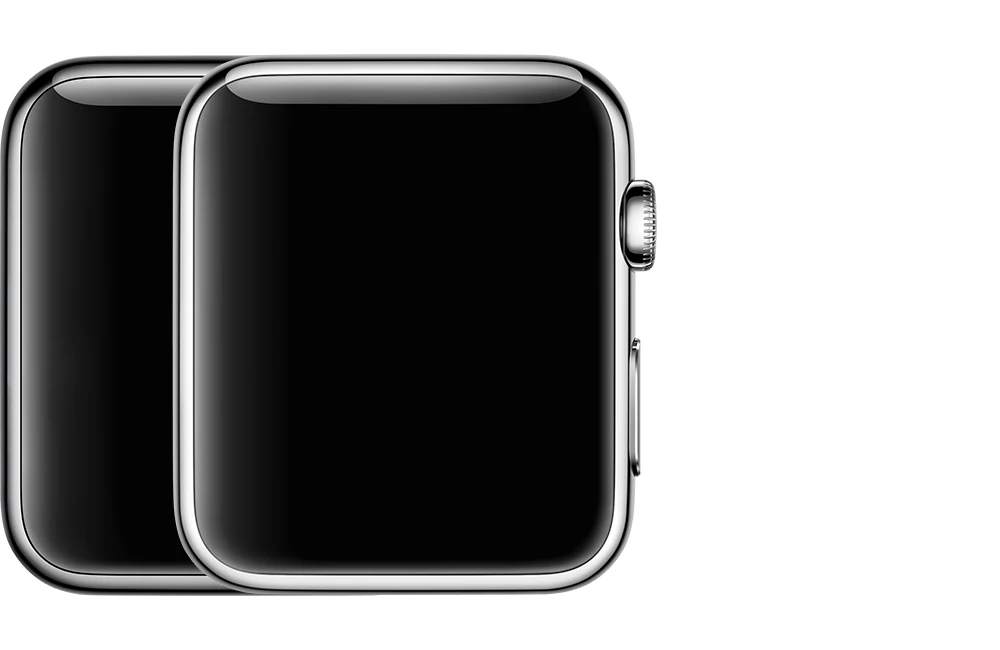
Apple's first new product category after the iPad, and for about a year nobody was sure what it was for. Apple launched it as a fashion object, with a gold Edition model at $17,000, Vogue covers and a Paris store opening, and spent the first year discovering that people wanted a fitness tracker and a notification screen rather than jewelry. The hardware was slow. The S1 struggled with third-party apps, which loaded over Bluetooth from the phone and could take long enough that you put your wrist down. Everything you might want to do took a beat too long. What worked immediately was the Taptic Engine, which tapped your wrist rather than buzzing, and the activity rings, which turned exercise into three circles you wanted to close. Those rings have survived every redesign since and are the thing most Watch owners actually use it for.
Reviews & Reception
The first reviews agreed the hardware was beautifully made and disagreed about what it was for. Several reviewers found it slow because so much data came from the paired phone, and more than one concluded it was too early to say whether anyone needed one.
The Apple Watch is still a smartwatch, and it's not clear that anyone's yet figured out what smartwatches are actually for.
What hinders many of the experiences is that the watch must pull information from the phone, leaving you with a spinning wheel that indicates data loading, rather than a quick hit of info.
The Watch is just useful enough to prove that the tech industry's fixation on computers that people can wear may soon bear fruit.
The big reason many people — even many Apple fans — will skip the Apple Watch is that it's too new.
Is my life better because of it? It's too soon to tell. But what I do know is that I thoroughly enjoy wearing it.