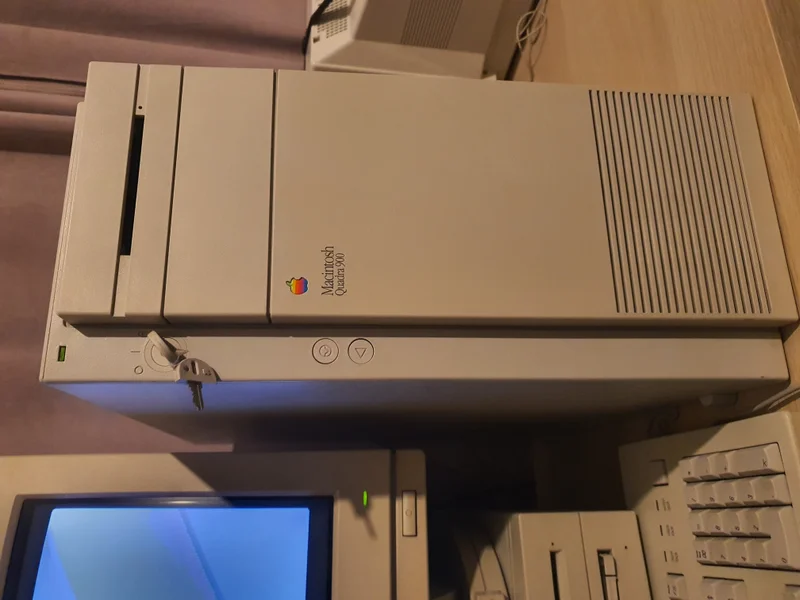
Macintosh Quadra 840AV
Advanced AV Mac with built-in DSP for real-time video capture and voice recognition. Ahead of its time.
The 840AV shipped July 29, 1993 with a 40MHz 68040 and a Motorola DSP3210 sitting next to it, which is what made it different from every Mac before. AV stood for audio-visual and Apple meant it literally. Video in and out were built into the machine, along with 16-bit audio and GeoPort telecom support, so a video professional could capture and output without buying a NuBus card first. The DSP handled real-time video and audio work that would otherwise have gone to the main processor. PlainTalk ran on that DSP. Speech recognition on a desktop computer in 1993 was startling to watch, and it worked well enough to demonstrate and not well enough to rely on. The 40MHz 68040 makes this the fastest 68k Mac Apple ever shipped, and with the DSP taking multimedia work off it, the 840AV handled capture jobs that stopped other machines dead. Video houses, broadcast people and QuickTime developers bought them. It cost a great deal, and the unusual AV architecture tripped up software that expected a normal Quadra. Reviewers called it the most advanced desktop available at any price and were not really exaggerating. PowerPC arrived a few months later. The 840AV is the last and best thing Apple built on Motorola's 68k.
Mac History Timeline
Full Specifications
Availability
Processor
Memory
Storage
Display
Graphics
Expansion
Connectivity
Physical
Processor Deep Dive
Motorola 68040
MotorolaRunning at 40MHz, the fastest clock speed ever shipped for a 68040 Macintosh, this chip in the 840AV was paired with a dedicated Motorola DSP3210 digital signal processor to offload audio and video tasks. The 68040's integrated FPU and dual caches already made it a significant leap over the 68030, and the added DSP gave the 840AV real-time multimedia capabilities far ahead of typical desktop computers. This combination made it one of the most technically sophisticated machines of the pre-PowerPC era. It represents the absolute performance ceiling of Apple's Motorola 68000-family desktop lineup.
Compatible Operating Systems

System 7.1
Launch OS1993
Shipped from the factory with AV-specific extensions supporting its DSP and video hardware.
System 7.5
Compatible1994
Ran excellently, taking advantage of the 840AV's fast 68040 and generous RAM support.
Mac OS 7.6.1
Compatible1997
One of the last major releases to fully support the specialized AV Quadra hardware.
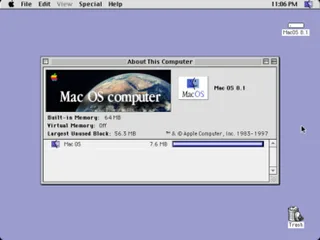
Mac OS 8.1
Max Supported1997
Could run in a limited capacity but was largely unsupported and impractical on 68k AV hardware, marking the effective ceiling.
Reviews & Reception
The Quadra 840AV was hailed as an extraordinarily forward-looking multimedia powerhouse and the high-water mark of 68k Macintosh engineering.
The Quadra 840AV feels like a machine from several years in the future, capturing broadcast-quality video without a single expansion card.
Apple's DSP-powered architecture delivers real-time audio and video processing that no rival desktop can currently match.
PlainTalk voice recognition is more novelty than daily tool right now, but it's a fascinating glimpse of where computing is headed.
This is unquestionably the most advanced desktop Macintosh money can buy, though its specialized architecture demands AV-aware software.