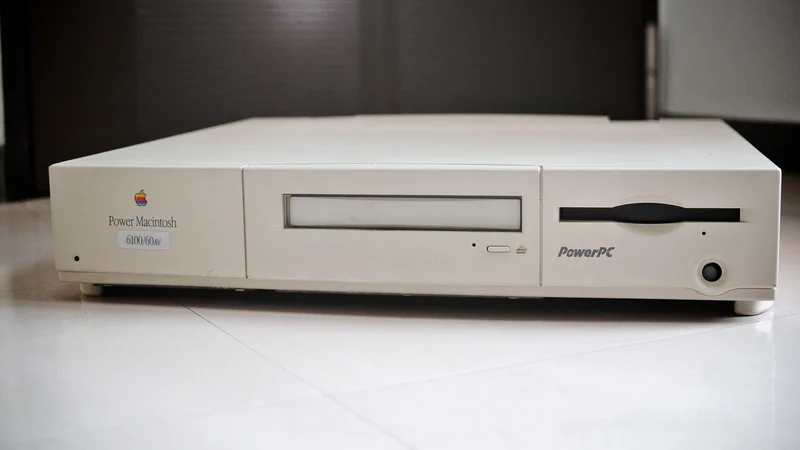
Power Macintosh 7100
Mid-range first-gen Power Mac. Popular with creative professionals needing NuBus expansion.
The 7100 was the middle of the first PowerPC trio, a 601 at 66 or 80MHz in a desktop case with NuBus slots. Those slots were the selling point. Creative professionals had spent years buying video, audio and scanner cards, and the 7100 meant none of that hardware became landfill on the day they upgraded. The 6100 below it was too small for serious expansion and the 8100 above it cost considerably more. System 7.1.2 and the 68k emulator came as standard, so existing software kept working while native PowerPC applications arrived. Reviewers generally called this the best value of the three, since it matched the 8100 on a lot of everyday work for less money. It had limits. The 66MHz configuration felt thin next to an 80MHz 8100 on floating-point work, and NuBus was visibly aging against the PCI expansion appearing on PCs. Design studios and video people bought them in quantity, which mattered, because a transition only succeeds if developers see enough machines in the field to justify porting their software.
Mac History Timeline
Full Specifications
Availability
Processor
Memory
Storage
Display
Graphics
Expansion
Connectivity
Physical
Processor Deep Dive
PowerPC 601
IBM/Motorola (AIM alliance)The 7100 used the same PowerPC 601 as its siblings, here offered in 66MHz and 80MHz configurations, a product of the Apple-IBM-Motorola AIM alliance formed to create a competitive RISC alternative to Intel's x86 line. Its unified execution engine handled integer, floating-point, and branch operations efficiently for its era, delivering strong performance on native software while relying on emulation for legacy 68k applications. Compared to the Pentium, the 601 offered compelling performance per clock, giving Apple real bragging rights during the platform's early days. The chip's success across the entire first-generation Power Mac lineup helped establish PowerPC as a credible, lasting architecture.
Compatible Operating Systems

System 7.1.2
Launch OS1994
Shipped as the original PowerPC-enabled operating system for the Power Mac 7100.
System 7.5
Compatible1994
Ran well, benefiting from the 7100's NuBus expansion and ample RAM support.
Mac OS 7.6.1
Compatible1997
Fully supported and performed solidly on this 601-based machine.
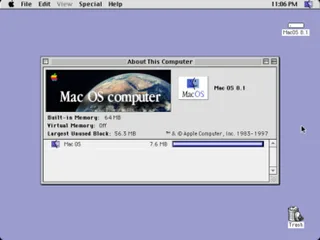
Mac OS 8.1
Max Supported1997
Represents the realistic ceiling for Old World ROM 601 Macs, as later releases required New World ROM support.
Reviews & Reception
The Power Mac 7100 was praised as the best-value machine in Apple's first PowerPC generation, popular with creative professionals.
The Power Mac 7100 is the smart buy of Apple's new lineup, delivering most of the 8100's speed for meaningfully less money.
Retaining NuBus expansion means creative professionals can keep their existing card investments while stepping into the PowerPC era.
Native applications fly on this machine, though the entry-level 66MHz configuration shows its limits under heavy floating-point workloads.
A well-judged middle ground in Apple's ambitious new PowerPC family, ideal for studios not ready to commit to flagship pricing.