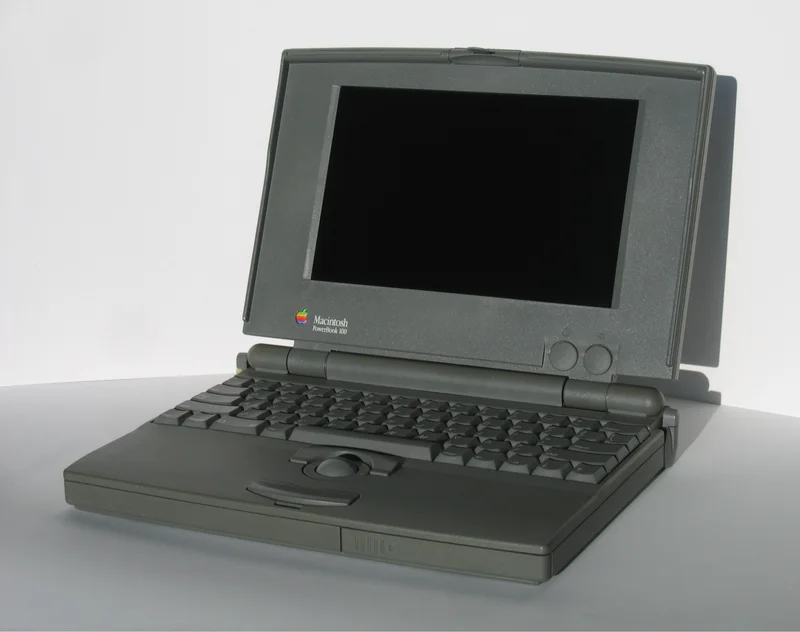
PowerBook 170
Top-of-the-line first PowerBook. First Apple laptop with an active-matrix display.
The 170 was the expensive one, and the reason was the screen. It carried the first active-matrix LCD Apple ever put in a laptop, which meant sharper contrast, quicker response and none of the ghosting that made the passive-matrix panels in the 100 and 140 tiring to read for any length of time. Underneath sat a 68030 at 25MHz, the fastest of the three, plus a 68882 floating-point coprocessor as standard. That last part was aimed at engineers and scientists who wanted numeric performance without going back to a desk. Everything else was shared. The rear keyboard, the centered trackball, the palm rest, the shape every laptop has copied since. Reviewers kept coming back to the display. It was the single argument for spending the extra money, and they were honest that battery life ran a little shorter than the 140's and the price was considerably higher. It became a status object among executives and designers. More usefully, the active-matrix panel and the built-in FPU set the specification that later PowerBooks, the 180 in particular, were measured against.
Mac History Timeline
Full Specifications
Availability
Processor
Memory
Storage
Display
Graphics
Expansion
Connectivity
Physical
Processor Deep Dive
Motorola 68030
MotorolaRunning at 25MHz and paired with a built-in 68882 floating-point coprocessor, the 68030 in the PowerBook 170 delivered the fastest performance of Apple's first PowerBook generation, matching the clock speed used in the acclaimed desktop Macintosh IIci. Its full 32-bit-clean architecture and integrated memory management unit made it fully capable of running System 7's more demanding features comfortably. The inclusion of a hardware FPU set the 170 apart from its siblings, targeting engineering, scientific, and CAD professionals who needed genuine numeric computation performance on the go. It represented the most powerful mobile implementation of the 68030 architecture Apple had yet produced.
Compatible Operating Systems

System 7.0.1
Launch OS1991
Shipped with the PowerBook 170, taking full advantage of its FPU and fast 68030.
System 7.1
Compatible1992
Ran excellently, a popular choice among PowerBook 170 professional users.
System 7.5.5
Max Supported1996
The realistic ceiling for a well-equipped PowerBook 170 with maximum RAM installed.
Reviews & Reception
Widely celebrated as the premium flagship of the first PowerBook generation, with its groundbreaking active-matrix display earning particular acclaim despite its high price.
The active-matrix display alone justifies the premium price, delivering a sharpness and clarity no other Mac laptop screen has ever matched.
With a built-in floating-point unit and the fastest 68030 in any PowerBook, the 170 is the clear choice for engineers and CAD professionals on the move.
A genuinely premium portable computer, though the price and shorter battery life relative to the 140 are real considerations for typical buyers.
Apple has proven a laptop can deliver desktop-class display quality and performance, setting a new bar for the entire industry to chase.