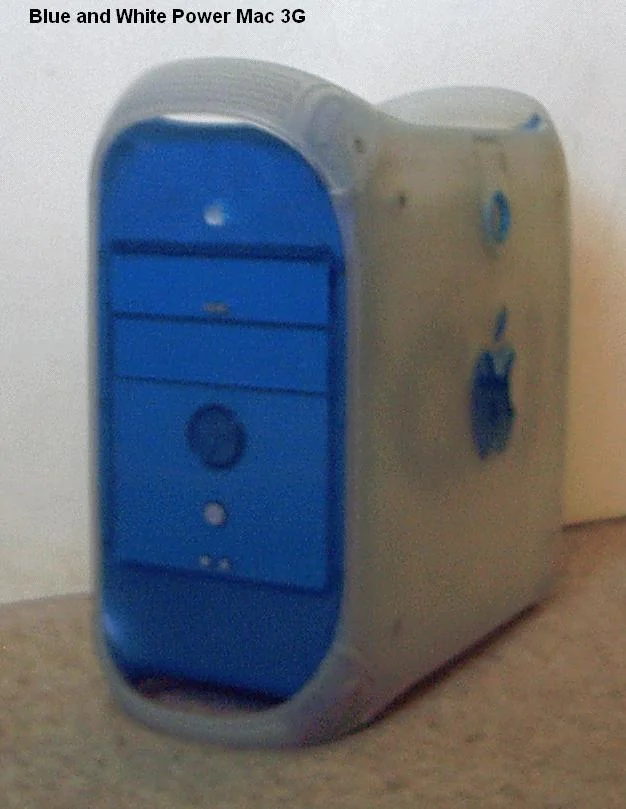
Power Macintosh G3 (Blue & White)
First Mac with FireWire 400. Dramatic redesign with translucent blue and white plastic tower.
Apple did to the professional tower what the iMac had done to the consumer desktop, five months later. The Blue and White G3 arrived January 5, 1999 in a translucent blue and white case with a side panel that swung open without a screwdriver. That hinge is what people remember. You laid the machine on its side, pulled a handle, and the entire logic board was in front of you, which PC towers would not manage for another decade. Inside, a G3 from 300 to 450MHz on Mac OS 8.5.1, and New World ROM, the same architecture as the iMac, which meant this machine could run Mac OS X natively and the Beige G3 it replaced never could. FireWire came as standard, and that is the part that mattered most. Apple had co-developed the bus, it was far quicker than USB at the time, and it arrived exactly as affordable DV camcorders started changing who could make a film. Video and audio people bought Blue and Whites specifically for those ports. Reviewers liked the case and the speed, and noted that the design revival was clearly not confined to consumer products.
Mac History Timeline
Full Specifications
Availability
Processor
Memory
Storage
Display
Graphics
Expansion
Connectivity
Physical
Processor Deep Dive
PowerPC 750 (G3)
IBM/MotorolaThe PowerPC 750 G3 in the Blue and White Power Mac ran from 300 up to 450MHz, its fastest implementation yet, continuing to outperform Intel's Pentium II and early Pentium III chips in numerous real-world professional benchmarks. Its efficient architecture and generous cache gave professional users strong performance for video, audio, and publishing workloads. This chip generation also benefited from the New World ROM architecture surrounding it, enabling a smoother eventual transition to Mac OS X that the earlier Old World ROM Beige G3 could not achieve.
Compatible Operating Systems
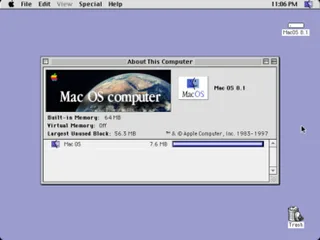
Mac OS 8.5.1
Launch OS1999
Shipped standard on the Blue and White Power Mac G3.
Mac OS 8.6
Compatible1999
Widely adopted stability update shortly after launch.
Mac OS 9.0
Compatible1999
Brought expanded multiple-user support and Sherlock 2.
Mac OS 9.2.2
Compatible2001
The final and most refined classic Mac OS release supported on this hardware.
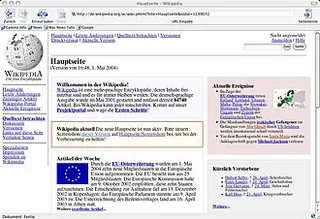
Mac OS X 10.3 Panther
Max Supported2003
Ran natively thanks to New World ROM architecture, generally considered the practical ceiling for smooth performance.
Reviews & Reception
The Blue and White G3 earned strong, near-unanimous praise for its tool-free design, pioneering FireWire support, and continued G3 performance advantage over Intel rivals.
The Blue and White G3 brings the iMac's design confidence to the professional tower, and the tool-free case is a genuine, lasting improvement.
Built-in FireWire arrives right as digital video is exploding, making this the machine serious video editors have been waiting for.
Performance against Pentium II workstations remains strong, and the redesigned case makes upgrades genuinely painless for the first time in years.
Apple's professional desktop finally looks as forward-thinking as its specs suggest, with FireWire positioning it well ahead of most Windows workstations.