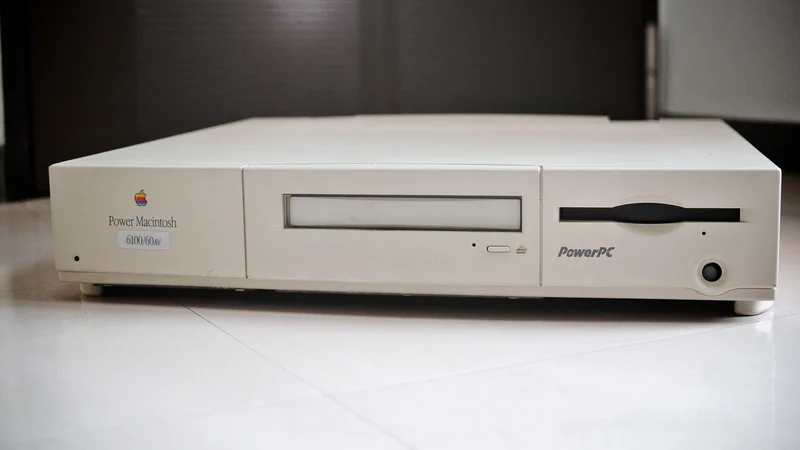
Power Macintosh 8500
AV-capable mid-range tower with built-in video input/output. Popular in multimedia production.
The 8500 was the video Mac. A PowerPC 604 between 120 and 150MHz, with professional video input and output built into the machine, so you could digitize NTSC or PAL and record back to tape without buying a capture card. In 1995 that was close to unheard of. Non-linear editing on a PC meant buying expensive specialist hardware, and here it sat in the box with Apple's own software to drive it. Independent producers bought them immediately. Schools, television production houses and corporate video departments followed, and the 8500 built a reputation as the machine that made desktop video practical years before Final Cut existed. It shared the case and PCI architecture with the 7500 and 9500. What separated it was the AV hardware and a faster stock processor, and the 604 also beat Pentium desktop-video rigs on rendering and compression while costing considerably more than a mainstream PC tower. It had rough edges. The AV daughtercard circuitry could be temperamental, and drivers frustrated early adopters for a long time. This is where Apple's approach of building a distinct Power Mac tier for each kind of work paid off best.
Mac History Timeline
Full Specifications
Availability
Processor
Memory
Storage
Display
Graphics
Expansion
Connectivity
Physical
Processor Deep Dive
PowerPC 604
Motorola/IBMThe PowerPC 604 was a superscalar, out-of-order RISC processor from the AIM alliance, capable of issuing up to four instructions per cycle across six execution units. In the 8500 it ran at 120 to 150MHz, giving strong performance in the compute-intensive video encoding and rendering tasks the machine was built for. It compared favorably against contemporary Pentium chips in floating-point and multimedia workloads, reinforcing Apple's marketing claims of RISC superiority, and it served as Apple's professional-tier processor until the arrival of the 604e and later the G3.
Compatible Operating Systems

Mac OS 7.5.2
Launch OS1995
Shipped with the 8500 at its August 1995 introduction.
Mac OS 7.5.5
Compatible1996
Addressed early stability issues on PCI Power Macs.
Mac OS 7.6
Compatible1997
First release under the unified 'Mac OS' branding.
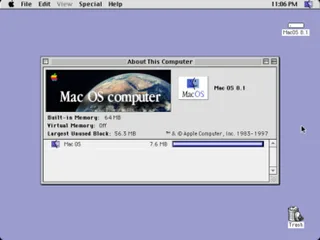
Mac OS 8.1
Max Supported1997
Practical performance and compatibility ceiling for 604-based Power Macs.
Reviews & Reception
The 8500 was celebrated as a groundbreaking desktop video machine, with its built-in AV hardware winning near-universal praise despite a premium price tag.
Built-in video in and out turns the 8500 into a desktop video studio out of the box, a feature no comparably priced Windows machine can match.
For video professionals this is the Power Mac to buy; the 604 chip chews through rendering tasks that would bring lesser machines to a crawl.
Apple has quietly built the most capable consumer-accessible video workstation on the market, though driver quirks occasionally test the patience of early adopters.
The video hardware is genuinely impressive, but the price puts the 8500 out of reach for anyone who isn't serious about production work.