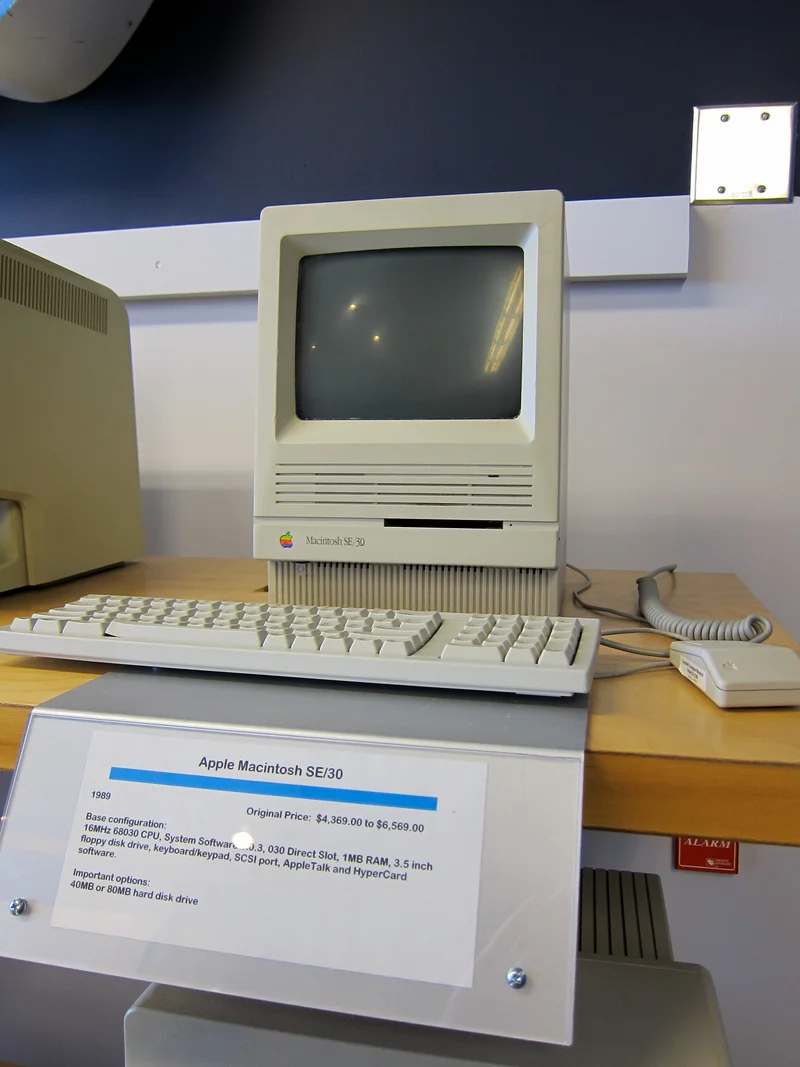
Macintosh SE/30
Considered the most powerful compact Mac of its era. Beloved for packing 68030 power into the classic form factor.
The SE/30 shipped January 19, 1989 and put roughly Mac IIx performance inside the 9-inch all-in-one case Apple had been selling since 1984. A 68030 at 16MHz, a 68882 floating-point coprocessor, and a properly 32-bit clean design that could address up to 128MB of RAM. Most Macs shipped with four. Nobody was fitting 128MB, but the ceiling being there at all told you what kind of machine this was. The SE's expansion slot came across and became a processor direct slot, which took video adapters, extra processors and networking cards. One slot, but a considerably more useful one. The screen stayed 9 inches and monochrome, and that was the trade. What you got instead was a machine that beat the much larger and more expensive IIx on a number of benchmarks while costing less and occupying a corner of the desk. Developers bought them, as did university labs and anyone who wanted desktop performance without a tower and a separate monitor. It ran System 7 comfortably years after machines of the same age had been retired, which is why so many stayed in use. The retro community still hunts them down, restores them and fits modern storage and displays, and SE/30 boards get recapped more often than almost any other Mac.
Mac History Timeline
Full Specifications
Availability
Processor
Memory
Storage
Display
Graphics
Expansion
Connectivity
Physical
Processor Deep Dive
Motorola 68030
MotorolaRunning at 16MHz and paired with a 68882 floating-point coprocessor, the 68030 in the SE/30 offered full 32-bit addressing that allowed the compact Mac to support far more RAM than any predecessor, up to 128MB in properly configured units. Its integrated memory management unit made it well suited to the demands of System 7's multitasking and virtual memory features that would arrive two years later. Despite sharing a clock speed with the Mac IIx, the SE/30's tighter overall system design let it match or exceed IIx performance in many real-world tasks. It cemented the 68030 as the defining processor of the late-1980s compact and modular Mac lineup alike.
Compatible Operating Systems
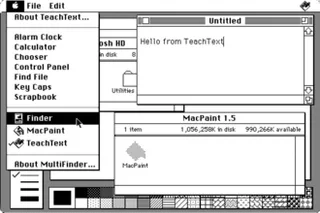
System 6.0.3
Launch OS1989
Shipped with the SE/30, fully exploiting its 68030 and FPU.

System 7.0
Compatible1991
Ran comfortably given the SE/30's generous maximum RAM capacity.
System 7.6.1
Max Supported1997
The practical ceiling for a well-equipped SE/30, still usable years after launch.
Reviews & Reception
Almost universally beloved as the finest compact Mac ever made, celebrated for delivering workstation-class speed in a small, affordable, all-in-one package.
The SE/30 packs nearly Mac IIx performance into the classic compact case, making it perhaps the single best value in Apple's entire lineup.
Astonishingly fast for its size and price, the SE/30 outperforms machines twice its footprint and cost.
A remarkable feat of engineering, cramming true workstation-class performance into a compact all-in-one chassis without compromise.
The small monochrome screen limits its appeal for color-dependent work, but for raw performance per dollar the SE/30 is exceptional.