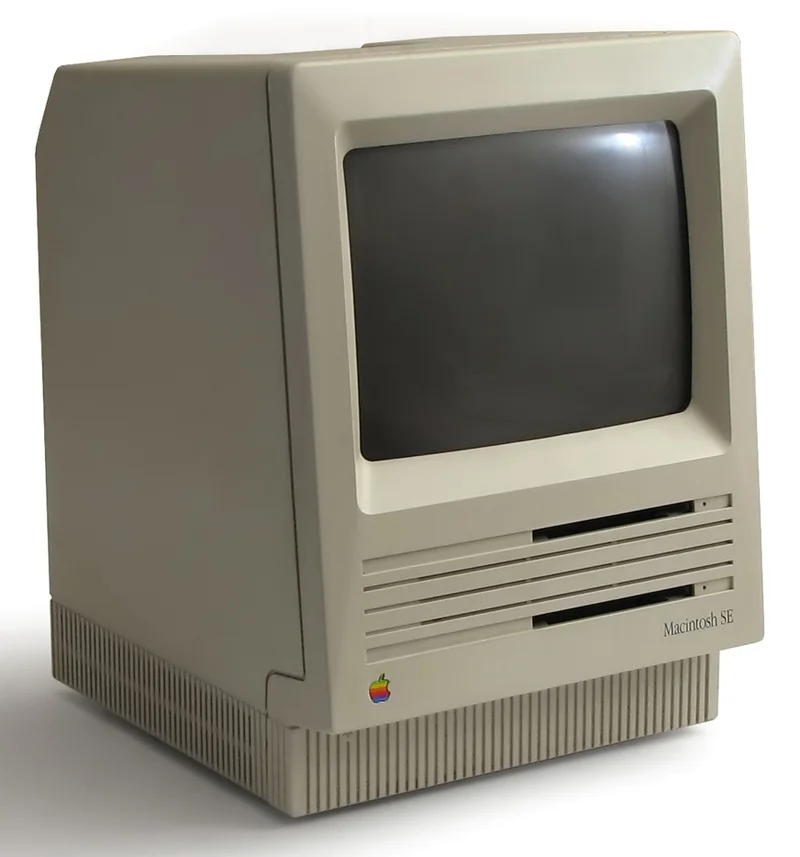
Macintosh SE FDHD
SE updated with a 1.44MB 'SuperDrive' floppy that could also read PC disks. FDHD stands for 'Floppy Drive, High Density'.
Apple refreshed the SE on August 1, 1989 by changing one component. The 800K floppy drive became the 1.44MB SuperDrive, the same FDHD mechanism that had turned up on the Macintosh IIx a year earlier. That sounds small. It was not, because the SuperDrive read and wrote MS-DOS and OS/2 disks, and by 1989 a great many Macs sat in offices full of PCs. Handing a colleague a floppy stopped being a problem, and this was the first compact Mac that could do it. Everything else stayed as it was. The same 7.83MHz 68000, the same single expansion slot, the same optional internal hard drive. Apple was keeping a two-and-a-half-year-old chassis on the price list for schools and for buyers who wanted the compact shape without paying SE/30 money. Reviewers were mild about it. The practical benefit was obvious and so was the fact that a 68030-powered SE/30 sat next to it in the same catalog, with the color Mac II machines above that. Schools bought it, and so did small offices that already ran Mac software and now wanted to swap disks with the accounting department. It is the less common of the two SE floppy configurations, which is most of why collectors look for it.
Mac History Timeline
Full Specifications
Availability
Processor
Memory
Storage
Display
Graphics
Expansion
Connectivity
Physical
Processor Deep Dive
Motorola 68000
MotorolaThe SE FDHD retained the same 7.83MHz 68000 as the original SE, meaning the update was entirely about storage rather than CPU performance. This made it the last major compact Mac release still relying on the original 68000 before Apple shifted the line's higher-end models to the 68030 with the SE/30. The chip's dated performance was an increasingly obvious weak point by 1989 against contemporaries using 68020 and 68030 processors. Its continued use reflected Apple's cost-conscious positioning of the base SE model.
Compatible Operating Systems
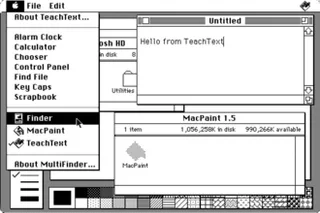
System 6.0.4
Launch OS1989
Shipped with the SE FDHD, adding SuperDrive high-density floppy support.
System 6.0.8
Compatible1991
The final and most polished System 6 release, well suited to this hardware.

System 7.0
Max Supported1991
Ran with adequate RAM but felt noticeably strained given the unchanged 68000 CPU.
Reviews & Reception
Seen as a practical but unexciting update, valued chiefly for its new cross-platform floppy compatibility rather than any performance gain.
The SuperDrive addition is a small but genuinely useful update, letting the SE finally trade disks with PC users without a hitch.
A sensible refresh rather than a reinvention, the FDHD keeps the venerable SE chassis relevant for another product cycle.
High-density floppy support is welcome, but buyers on a similar budget should strongly consider the far speedier SE/30 instead.
It does exactly what it promises and nothing more, a safe, low-risk update to an already trusted machine.