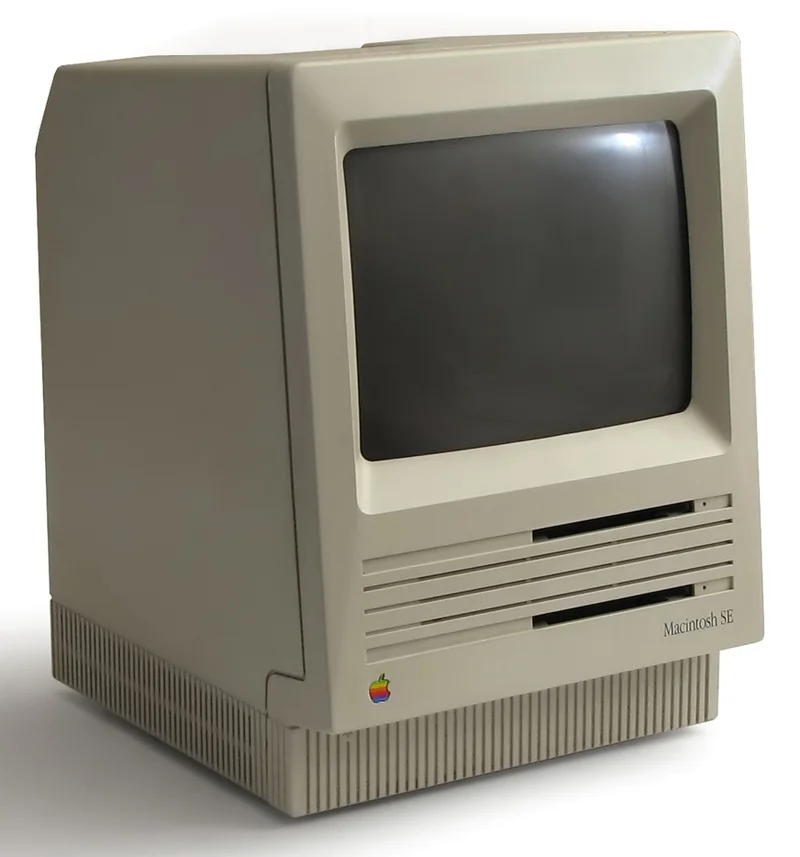
Macintosh SE
First compact Mac with an internal hard drive and expansion slot (PDS). Also added an ADB port.
The Macintosh SE arrived March 2, 1987, the same morning as the Macintosh II, and got rather less attention than it deserved. SE stood for System Expansion. It was the first compact Mac with an internal expansion slot and the first with an internal hard drive option, which between them answered years of complaints about a sealed case Apple had deliberately made hard to open. One slot is not six. The Mac II had six NuBus slots against the SE's single connector, but third parties filled that one with accelerators and networking cards and kept the machines useful for years longer than they would otherwise have been. The processor did not change. Still a 7.83MHz 68000, still no faster than a Plus. What changed was everything around it: a fan, a quieter and better-built chassis, room for a 20 or 40 megabyte SCSI drive inside the case instead of cabled to the back. The Apple Desktop Bus turned up here too, and ADB keyboards and mice stayed standard across the line for the next ten years. Reviewers liked the build and the practicality and kept pointing at the other machine launched that morning. Next to a color-capable Mac II the SE's 9-inch monochrome screen looked like 1984, which it was. Schools and small offices bought it in quantity. Two years later the SE/30 put a 68030 in the same case and became one of the best-liked Macs Apple ever made.
Mac History Timeline
Full Specifications
Availability
Processor
Memory
Storage
Display
Graphics
Expansion
Connectivity
Physical
Processor Deep Dive
Motorola 68000
MotorolaThe SE used the same 7.83MHz 68000 as the Plus, meaning its advances were architectural and structural rather than about raw processing speed. Its internal expansion slot allowed accelerator cards to later replace or supplement this processor for users needing more performance. The chip's mature, simple design remained easy to support even as Apple began transitioning higher-end machines to the more powerful 68020. By 1987 it represented the practical performance ceiling for Apple's low-end compact Mac line.
Compatible Operating Systems
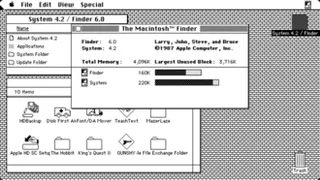
System 4.0
Launch OS1987
Shipped with the SE, adding support for its internal hard drive and expansion slot.
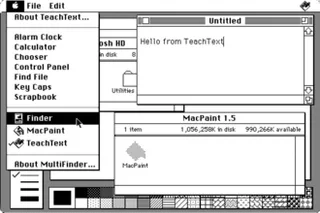
System 6.0.8
Compatible1991
A very stable and popular release widely used on SE hardware.

System 7.0
Max Supported1991
Ran on an SE with sufficient RAM, though performance was noticeably strained.
Reviews & Reception
Praised for its expandability and internal storage but seen by some as conservative next to the more ambitious Macintosh II released the same day.
The internal hard drive and expansion slot finally give the compact Mac room to grow, making the SE the sensible choice for offices wanting an all-in-one machine.
Solid, quiet, and expandable, the SE is everything the Plus should have been, even if the screen and processor feel unchanged from 1984.
Compared to the Macintosh II launched the same day, the SE feels conservative, but its lower price and familiar form factor will win over cautious buyers.
An admirably practical update to the compact Mac formula, held back only by a CPU that has not kept pace with the rest of the industry.