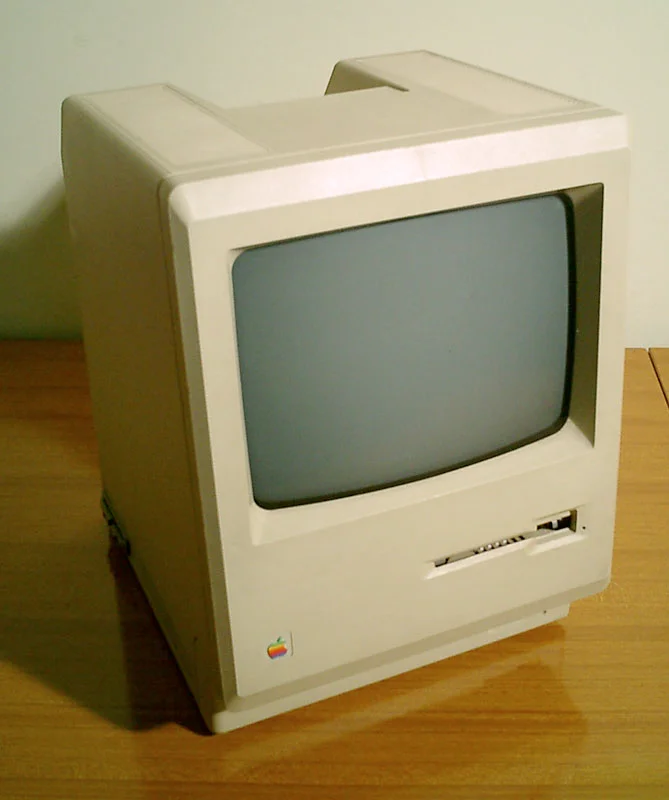
Macintosh Plus
Added SCSI port and double-density disk drive. Became Apple's longest-lived Mac, sold for 4.5 years.
The Macintosh Plus went on sale January 16, 1986 and stayed on Apple's price list until October 1990. Four and a half years. No Mac before or since has had that run, and the SCSI port is most of the reason. First one on any Macintosh, and it meant external hard drives and a whole peripheral market could connect at speeds the old serial ports never approached. An 800K double-sided floppy came with it, along with a full megabyte of RAM that owners could take to 4MB themselves by adding SIMMs. That combination answered nearly every complaint about the 128K and the 512K at once. Memory stopped being a daily constraint, storage got faster and larger, and owning a hard drive became a reasonable thing for a Mac owner to consider rather than an expensive fantasy. The processor was still the 7.83MHz 68000, unchanged, so the benchmarks said very little, and the machine felt like a different class of computer anyway. The keyboard finally got a numeric keypad and arrow keys, which touch typists and anyone doing spreadsheets had been asking for since 1984. PageMaker and the LaserWriter turned up around the same time and gave the Mac a job DOS machines could not do at all, and desktop publishing sold a lot of these into offices that had previously not taken Apple seriously. For a great many students, small businesses and first-time buyers, the Plus was the first computer they owned.
Mac History Timeline
Full Specifications
Availability
Processor
Memory
Storage
Display
Graphics
Expansion
Connectivity
Physical
Processor Deep Dive
Motorola 68000
MotorolaThe Plus retained the same 7.83MHz 68000 used since 1984, so its improvements over earlier compact Macs came entirely from expanded RAM, SCSI support, and better storage rather than raw CPU throughput. The chip's straightforward 32-bit internal architecture remained easy to program for and was well understood by the developer community by this point. It was, by 1986 standards, beginning to lag behind the 68020 chips appearing in higher-end workstations. Even so, its reliability and mature toolchain made it a safe, well-supported choice for Apple's flagship compact Mac for years to come.
Compatible Operating Systems
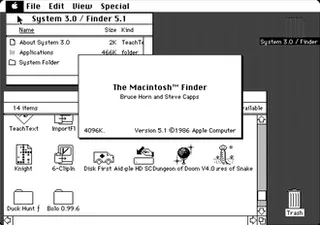
System 3.0
Launch OS1986
Shipped with the Plus, introducing SCSI driver support and HFS.
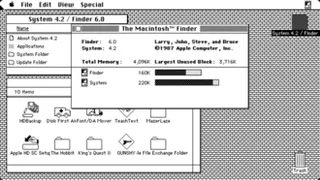
System 4.1
Compatible1987
A stable, well-supported release widely used on Plus hardware.
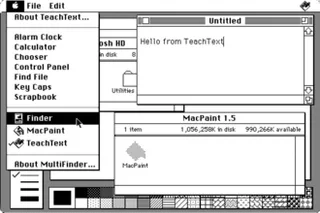
System 6.0.8
Compatible1991
The most refined System 6 release, still comfortably run on a Plus with 4MB RAM.

System 7.0
Max Supported1991
Technically ran on a maxed-out 4MB Plus but was sluggish and pushed the machine's limits.
Reviews & Reception
Widely praised as the machine that made the Macintosh platform truly practical and business-credible, and remembered as a landmark, long-lived product.
With SCSI support and a full megabyte of memory, the Plus finally gives the Macintosh the storage and expansion options serious users have been asking for.
This is the Mac that business can finally take seriously, though the small screen still limits its appeal for spreadsheet-heavy work.
The addition of SCSI and expandable memory transforms the platform's practicality without sacrificing the elegant simplicity that made the Mac famous.
A genuinely well-rounded machine at last, though DOS users will still find the software selection comparatively narrow.