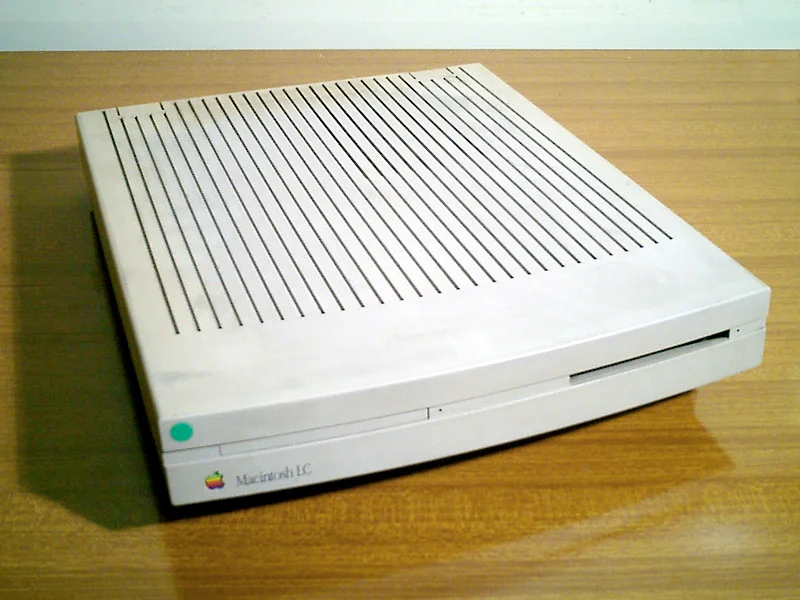
Macintosh LC II
Updated LC with 68030 processor at the same 16MHz. More popular than the original LC.
The LC II arrived March 23, 1992 with a 68030 at 16MHz where the original LC had a 68020, and since the clock speed did not move, the machine was not much faster. What changed was that it became fully 32-bit clean with proper memory management, which the original had not been, and that was the most legitimate complaint anyone had made about the LC. Anyone running System 7 seriously wanted virtual memory to work properly. Everything else stayed. The same low wide case, the same price bracket, and the same Apple IIe card slot that had sold the original into American schools a classroom at a time. Reviewers noted the fix, noted the modest real-world gain, and moved on. It sold enormously anyway, held the LC's position in education, and became a common basis for the Performa machines Apple started pushing to consumers around the same time. Apple had worked out that a product selling this well does not need redesigning, only correcting.
Mac History Timeline
Full Specifications
Availability
Processor
Memory
Storage
Display
Graphics
Expansion
Connectivity
Physical
Processor Deep Dive
Motorola 68030
MotorolaThe LC II used a 16MHz 68030, the same clock speed as the original LC's 68020 but with the crucial addition of a full 32-bit-clean architecture and integrated memory management unit. This made the LC II considerably more capable of properly supporting virtual memory and System 7's more advanced features than its predecessor. While clock-for-clock performance gains over the original LC were modest, the architectural upgrade addressed the most significant technical criticism of the earlier machine. It helped extend the 68030's reign as Motorola's most widely deployed processor across Apple's consumer and education-focused Mac lineup.
Compatible Operating Systems

System 7.0.1
Launch OS1992
Shipped with the LC II, finally offering full 32-bit-clean support in Apple's affordable color line.
System 7.1
Compatible1992
Ran well, a popular choice for schools and home users upgrading their LC II machines.
System 7.5.5
Max Supported1996
The realistic ceiling for a well-equipped LC II with maximum RAM installed.
Reviews & Reception
Well received as a sensible architectural fix to the original LC, continuing its dominance in education and budget-conscious markets.
The move to a full 32-bit-clean 68030 finally gives the LC line the architectural foundation it should have had from the start.
A sensible, welcome upgrade that fixes the original LC's biggest technical shortcoming without changing the winning formula that made it so popular in schools.
Performance gains over the original LC are modest given the unchanged clock speed, but the architectural improvements matter for long-term software compatibility.
Apple continues to nail the education and budget consumer market with the LC II, an easy recommendation for schools already invested in the platform.