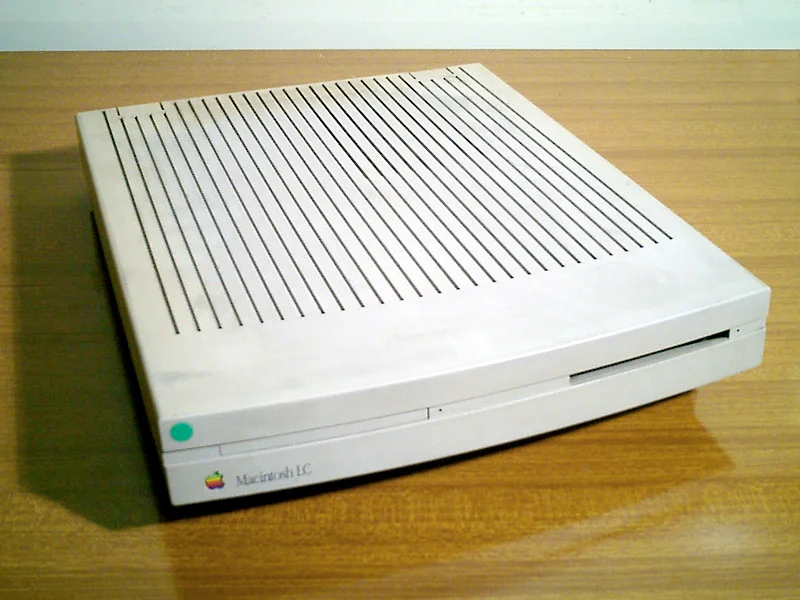
Macintosh LC
Apple's first affordable color Mac. The flat 'pizza box' design became iconic in schools and homes.
The Macintosh LC went on sale October 15, 1990 alongside the Classic and the IIsi, and it was the first color Mac a school or a family could actually afford. The case was new. Low and wide, a pizza box that sat under a monitor rather than beside one, and visually nothing like either the Mac II towers or the compact all-in-ones. Inside, Apple cut where it could. A 68020 at 16MHz rather than a 68030, which hit the price but meant no proper memory management unit and noticeably less speed than its more expensive siblings. Color video was built onto the board, so buyers got color without paying for a NuBus card, which was the whole argument for the machine. There was also a slot for an Apple IIe emulation card. American schools had enormous numbers of Apple II machines and software, and this let administrators move to color Macs without abandoning any of it. Entire labs went LC, and the machine sold in volumes Apple had not seen from a color Mac before. Reviewers said it was what Apple needed against cheap color PC clones and noted that anyone serious would outgrow it, there being no NuBus slots and not much headroom. Both were true. The LC II, LC III and the whole Performa line came out of this one.
Mac History Timeline
Full Specifications
Availability
Processor
Memory
Storage
Display
Graphics
Expansion
Connectivity
Physical
Processor Deep Dive
Motorola 68020
MotorolaThe LC used a 16MHz 68020, the same processor family as the original Mac II but at a more budget-friendly implementation without the 68030's integrated memory management unit. This was a deliberate cost-saving measure that let Apple hit an aggressive consumer price point at the expense of virtual memory support and some raw throughput compared to 68030-based machines. Despite the compromise, it was fully capable of driving the LC's built-in color video, making it more than adequate for education and home users prioritizing affordability over maximum performance. It represented Motorola's continued relevance across Apple's price tiers even as the 68030 became the norm for higher-end machines.
Compatible Operating Systems
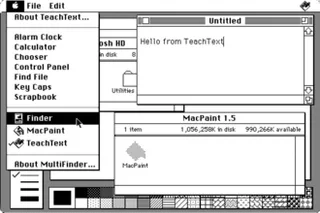
System 6.0.7
Launch OS1990
Shipped with the LC, supporting its built-in color video from the start.

System 7.0
Compatible1991
Ran reasonably well with adequate RAM, though the 68020 limited overall speed.
System 7.5.5
Max Supported1996
The practical ceiling given the LC's non-32-bit-clean 68020 processor.
Reviews & Reception
Praised as a landmark affordable color Mac especially popular in education, with some reservations about its non-32-bit-clean processor limiting future upgrade headroom.
At last, a genuinely affordable color Macintosh, one that will finally let schools and families experience color computing without a workstation-level budget.
The Apple IIe card is a brilliant touch for schools with existing Apple II investments, making the LC an easy sell for education budgets.
The 68020 without a memory management unit feels like a step backward for anyone hoping to run tomorrow's more demanding System software.
A smart, market-savvy machine that finally brings color to the mainstream Mac buyer, even if power users will want more expansion room.