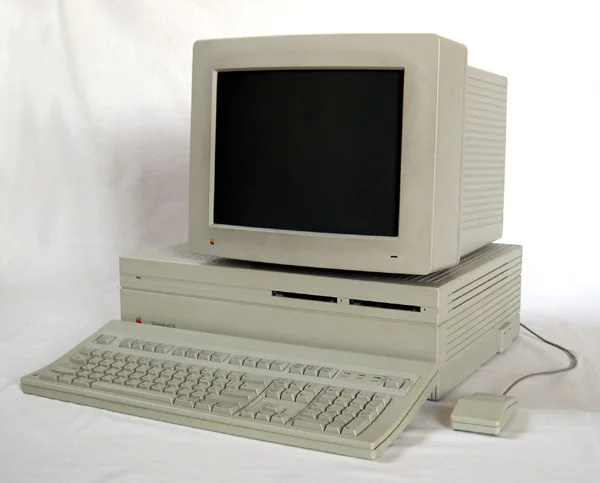
Macintosh IIsi
Affordable modular Mac with built-in audio and video. Bridged the gap between the LC and IIci.
The IIsi launched October 15, 1990, the same day as the LC and the Classic, and sat between them and the IIci in both price and capability. A 68030 at 20MHz against the IIci's 25. Slower, but with the same 32-bit-clean architecture and the same integrated memory management unit, which is what the LC's 68020 could not offer and what mattered for anything running System 7 seriously. Expansion was the compromise. No NuBus slots as standard, but an adapter card added one, which gave buyers a modest upgrade path without the IIci's three-slot chassis or its price. Color video was on the board, as on the IIci, so no video card was needed. It also had a built-in microphone. Apple shipped early sound and speech recognition software to go with it, which was unusual in 1990 and pointed at where the company thought consumer computing was going. Reviewers liked the value. Real 68030 computing was now reachable for small businesses, though they noted one slot against three and performance that never quite caught the IIci. That October Apple replaced most of its lineup in a single morning, and the LC, Classic and IIsi together gave the Mac a proper good, better, best structure for the first time.
Mac History Timeline
Full Specifications
Availability
Processor
Memory
Storage
Display
Graphics
Expansion
Connectivity
Physical
Processor Deep Dive
Motorola 68030
MotorolaRunning at 20MHz in the IIsi, this 68030 implementation split the difference between the IIcx and IIci in raw clock speed while offering the same full 32-bit-clean architecture and integrated memory management unit found across the 68030 family. This made the IIsi considerably more future-proof than the LC's 68020, capable of properly supporting virtual memory and later System 7 features without compromise. Its balance of solid performance and lower cost than the IIci made it an attractive option for budget-conscious professionals. It reinforced the 68030 as Apple's core processor across a wide swath of its early-1990s desktop lineup.
Compatible Operating Systems
System 6.0.7
Launch OS1990
Shipped with the IIsi, taking full advantage of its 32-bit-clean 68030.

System 7.0
Compatible1991
Ran well and was a popular upgrade path for IIsi owners thanks to the clean 68030 architecture.
System 7.6.1
Max Supported1997
The realistic ceiling for a well-equipped IIsi with maximum RAM installed.
Reviews & Reception
Generally well received as a smart value-oriented bridge between the LC and IIci, with some reservations about its limited expansion slot count.
The IIsi hits a sweet spot between the affordable LC and the pricier IIci, delivering genuine 32-bit-clean performance at a much friendlier price.
A smart, well-balanced machine, though the single-slot expansion limitation compared to the IIci is a real compromise for growth-minded buyers.
Small businesses finally have an affordable path to real Mac II performance without the premium the IIci commands.
The built-in microphone and sound features hint at interesting future directions, though the core appeal remains solid, value-oriented 68030 performance.