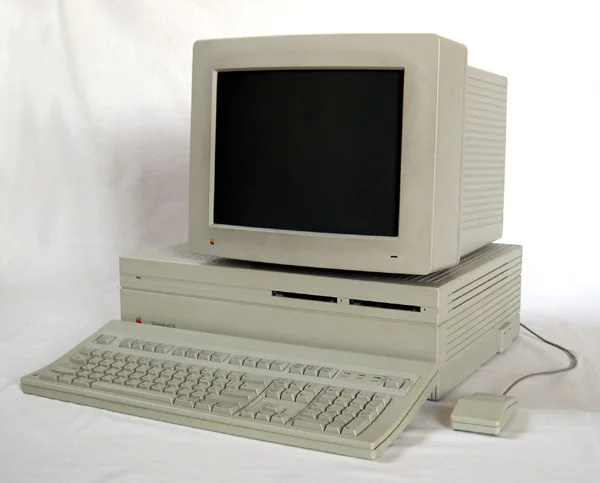
Macintosh IIfx
Fastest 68030 Mac ever made. Used proprietary 64-pin SIMMs and dedicated I/O processors for extreme performance.
The IIfx arrived March 19, 1990 as the fastest Mac Apple could build, and it held that title for the rest of the 68030 era. A 68030 at 40MHz with a 68882 running at the same speed. Around it Apple put custom support silicon, including dedicated I/O processors that handled serial communication and disk access so the main CPU never stopped to deal with them. That system-level work is why the machine felt faster than the clock speed alone explained. Publishers, scientists and CAD users bought it, along with anyone whose work was genuinely CPU-bound and who could justify the price. The memory was the sore point. The IIfx needed proprietary 64-pin SIMMs instead of the industry-standard modules every other Mac took, so upgrading RAM cost considerably more and finding the parts was harder. Owners complained about this for years and reviewers raised it in every writeup alongside the praise. Six NuBus slots came from the original Mac II rather than the trimmed-down IIcx and IIci, which tells you who it was for. No 68030 Mac ever went faster. The Quadras that followed in 1991 were quicker, but they were a different architecture rather than a successor within the same family.
Mac History Timeline
Full Specifications
Availability
Processor
Memory
Storage
Display
Graphics
Expansion
Connectivity
Physical
Processor Deep Dive
Motorola 68030
MotorolaClocked at 40MHz in the IIfx, this was the fastest implementation of the 68030 Apple ever shipped, paired with a matching 40MHz 68882 floating-point coprocessor for maximum numeric throughput. Combined with dedicated I/O processor chips that offloaded serial and disk tasks from the main CPU, the IIfx's overall system architecture extracted considerably more real-world performance than the raw clock speed alone would suggest. This made it the fastest 68030-based Mac ever produced, a title it held even after Apple's later transition to 68040-based Quadra machines represented a different processor generation entirely. Its proprietary 64-pin SIMM memory architecture, while technically effective, made it an outlier compared to the standard 30-pin and 72-pin SIMMs used elsewhere in Apple's lineup.
Compatible Operating Systems
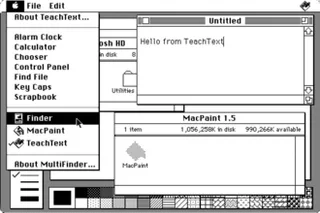
System 6.0.5
Launch OS1990
Shipped with the IIfx, the first System release tuned specifically for its custom I/O architecture.

System 7.0
Compatible1991
Ran superbly given the IIfx's exceptional speed and expandable memory.
System 7.6.1
Max Supported1997
The realistic ceiling for a well-equipped IIfx with maximum proprietary RAM installed.
Reviews & Reception
Celebrated almost universally as the fastest Mac of its generation, with the only significant criticism being its expensive proprietary memory and steep overall price.
The IIfx is, without question, the fastest Macintosh ever built, a genuine workstation for professionals who refuse to compromise on speed.
Extraordinary raw performance thanks to dedicated I/O processors, though the proprietary memory modules are an expensive and frustrating requirement.
For publishing houses and scientific users who need every ounce of speed, nothing else in Apple's lineup comes close to the IIfx.
Blazing fast but eye-wateringly expensive, with memory upgrades that cost far more than they should thanks to Apple's proprietary SIMM design.