
Macintosh IIci
Fastest Mac II for years. First Mac with built-in color video support without an add-in card.
The IIci went on sale September 20, 1989 and stayed Apple's fastest mainstream desktop for about two years, which in that industry at that moment was a very long time. A 68030 at 25MHz did most of the work. That was a real jump over the IIx and the original Mac II, not an architectural one you had to squint at. More usefully, the IIci was the first Macintosh with color video built onto the logic board, so a typical setup no longer burned a NuBus slot on a video card just to drive a monitor. The case shrank too. A low flat pizza box instead of a tower, three NuBus slots instead of six, and a shape that fitted on a desk with a monitor sitting on top of it. There was also a cache slot, and the cache cards that went in it were popular with anyone chasing the last available percent. Reviewers called it the best all-round Mac you could buy and meant it. Speed, built-in video, a sensible size and real expansion, at a price that looked reasonable next to what the Mac II and IIx had cost, which made it the default recommendation for publishers and professionals who did not need a IIfx. Built-in video became standard on Macs after this. Plenty of IIci units stayed in service for most of a decade running AppleShare servers and page layout software, and the machine still gets named as the best of the Mac II family.
Mac History Timeline
Full Specifications
Availability
Processor
Memory
Storage
Display
Graphics
Expansion
Connectivity
Physical
Processor Deep Dive
Motorola 68030
MotorolaRunning at 25MHz in the IIci, the 68030 delivered a substantial real-world performance jump over the 16MHz IIx thanks to both the higher clock speed and the chip's integrated memory management unit. Its onboard instruction and data caches, combined with the IIci's optional cache card slot, made it exceptionally fast for its era among mainstream desktop Macs. The 68030 remained Motorola's workhorse 32-bit processor through the late 1980s and early 1990s, powering everything from the LC line up through the IIci and IIsi. Its balance of performance, integrated MMU, and manageable power draw made it one of the most successful chips in the 68k family's history.
Compatible Operating Systems
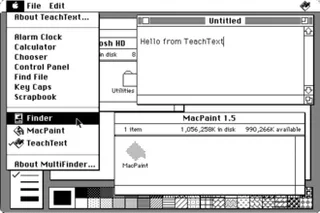
System 6.0.4
Launch OS1989
Shipped with the IIci, taking advantage of its built-in color video support.

System 7.0
Compatible1991
Ran very well, and the IIci was a popular platform for early System 7 adoption.
System 7.6.1
Max Supported1997
The realistic ceiling for a well-equipped IIci with maximum RAM and a cache card.
Reviews & Reception
Almost universally praised as one of the finest Macs of its era, celebrated for its speed, built-in video, and remarkable longevity as Apple's flagship desktop machine.
The IIci is simply the best Macintosh Apple has ever built, combining blistering speed, built-in video, and a practical compact case into one outstanding package.
Fast, well-designed, and remarkably future-proof thanks to its cache slot, the IIci sets a new standard for what a professional Macintosh should be.
Built-in color video and a genuinely fast 68030 make the IIci the new default recommendation for serious Mac buyers.
A superbly balanced machine, though buyers should budget for the optional cache card to get the most out of it.