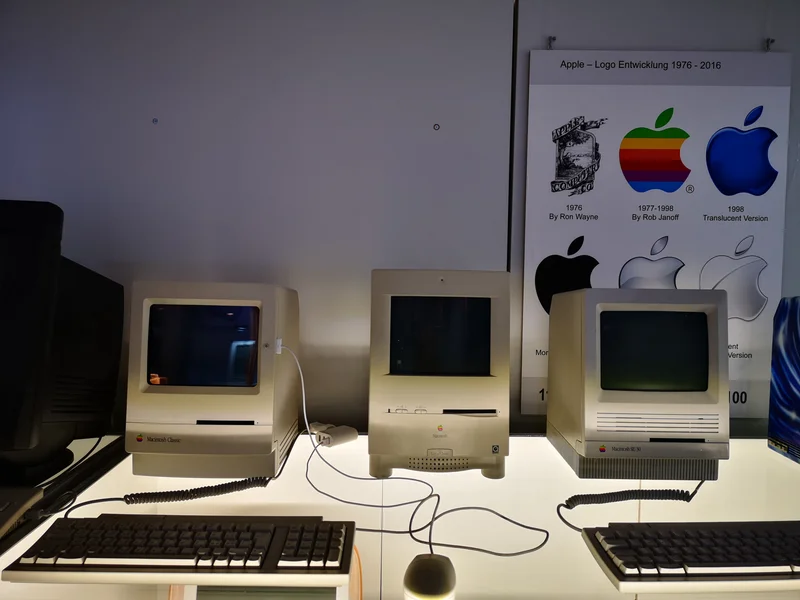
Macintosh Color Classic II
Japan/Canada only successor to the Color Classic with faster 68030 and better display.
Apple sold the Color Classic II in Japan and Canada and nowhere else, which is the first thing anyone says about it. The machine itself was straightforward: a 33MHz 68030 where the original Color Classic had 16MHz, in the same 9-inch color all-in-one case, running System 7.1. Everyday work got noticeably quicker, and word processing, spreadsheets and educational software all stopped feeling sluggish. Nobody has ever explained why. The usual reading is regional product strategy, with the LC III covering the same ground in America, and that is probably right without being satisfying. The restriction made it rare, and rarity made it wanted. North American collectors had to import one, which took effort then and takes money now. The 9-inch screen still ruled out serious graphics work, so this was a home, school and light-office machine as its predecessor had been. Reviewers in the two markets that got it praised the speed and repeated the standing complaints about compact Macs, which were not much expansion and not much screen.
Mac History Timeline
Full Specifications
Availability
Processor
Memory
Storage
Display
Graphics
Expansion
Connectivity
Physical
Processor Deep Dive
Motorola 68030
MotorolaThe Color Classic II's 33MHz 68030 was a substantial upgrade over the 16MHz 68030 used in the original Color Classic, delivering markedly snappier everyday performance. Its integrated MMU supported System 7.1's memory management needs comfortably within the compact Mac's modest RAM ceiling. As a mature, well-proven chip by 1993, it offered reliable performance for the home and education-focused audience this machine targeted. Its presence reflected Apple's practice of refreshing beloved compact form factors with faster, proven silicon rather than radical redesigns.
Compatible Operating Systems

System 7.1
Launch OS1993
Shipped from the factory as the Color Classic II's original operating system.
System 7.5
Compatible1994
Ran acceptably given careful RAM management on this compact all-in-one Mac.
System 7.5.5
Max Supported1996
Considered the practical ceiling for smooth performance on this 68030-based compact Mac.
Mac OS 7.6.1
Compatible1997
Technically installable but performance was noticeably strained on this modest hardware.
Reviews & Reception
The Color Classic II was well regarded in its limited markets as a faster, refined take on the beloved compact color Mac, though its regional exclusivity later made it a sought-after rarity.
The faster processor makes a genuine difference in everyday responsiveness compared to the original Color Classic, a welcome refinement.
It's a shame this speedier compact color Mac never received a wider release, its charm and improved performance deserved a bigger audience.
The small 9-inch screen still limits serious use, but for home and classroom computing this remains an endearing little machine.
A regional curiosity that nonetheless represents a solid, if modest, evolution of Apple's compact color Mac concept.