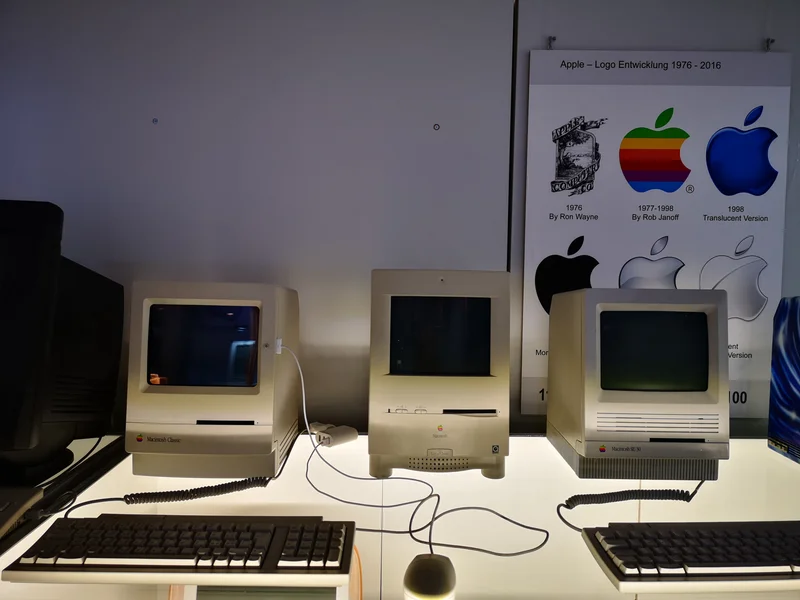
Macintosh Classic II
Successor to the Classic with a faster 68030 processor but still in the beloved compact form factor.
The Classic II landed October 21, 1991, a year after the original Classic had broken $1,000, and put a 68030 at 16MHz where the 68000 had been. That was overdue. The original Classic had shipped with the same processor as the 1984 Macintosh, which by 1991 was an awkward thing to be selling next to 68030 machines elsewhere in the same catalog. The shape did not change. Nine-inch monochrome all-in-one, the compact Mac that had run from the SE onward, aimed at schools and families who wanted something simple and reliable rather than color and a separate monitor. The 68030 meant System 7 ran properly on it, which the 68000 had struggled with. Reviewers welcomed that, noted the price had barely moved, and then pointed out that anyone who wanted color was better off with the LC II at a similar price. That was fair and Apple never really resolved it, since the two machines competed for the same buyers from different directions. This is the last all-new compact Mac in the 9-inch form factor. Apple moved the consumer line toward color displays after it, and eventually toward LCD panels, which ended a shape that had run for almost eight years.
Mac History Timeline
Full Specifications
Availability
Processor
Memory
Storage
Display
Graphics
Expansion
Connectivity
Physical
Processor Deep Dive
Motorola 68030
MotorolaThe Classic II used a 16MHz 68030, replacing the original Classic's dated 7.83MHz 68000 with a full 32-bit-clean architecture and integrated memory management unit. This gave it meaningfully better real-world performance and proper support for System 7's more demanding features, a significant step up for Apple's most affordable compact Mac chassis. Despite the upgrade, its clock speed remained modest compared to contemporaries like the SE/30 and IIci, reflecting its positioning as a budget rather than performance-oriented machine. It represented the final major processor upgrade to the classic 9-inch compact Mac form factor before Apple's consumer strategy shifted more fully toward color and portable designs.
Compatible Operating Systems

System 7.0
Launch OS1991
Shipped with the Classic II, finally bringing 68030 performance to Apple's compact budget Mac.
System 7.1
Compatible1992
Ran well on the Classic II's 32-bit-clean architecture.
System 7.5.5
Max Supported1996
The realistic ceiling for a well-equipped Classic II with maximum RAM installed.
Reviews & Reception
Welcomed as an overdue and sensible processor upgrade to Apple's budget compact Mac, though some saw it as overlapping awkwardly with the color-capable LC II.
The Classic II finally retires the original 1984 processor from Apple's budget compact Mac, a welcome and overdue upgrade for schools and first-time buyers.
A sensible, modestly-priced update that brings genuine 68030 performance to the beloved compact Mac form factor.
Buyers wanting color for a similar price should look at the LC II instead, leaving the Classic II in a slightly awkward position within Apple's own lineup.
Simple, dependable, and now genuinely capable of running System 7 comfortably, the Classic II remains an easy recommendation for budget buyers who prize simplicity.