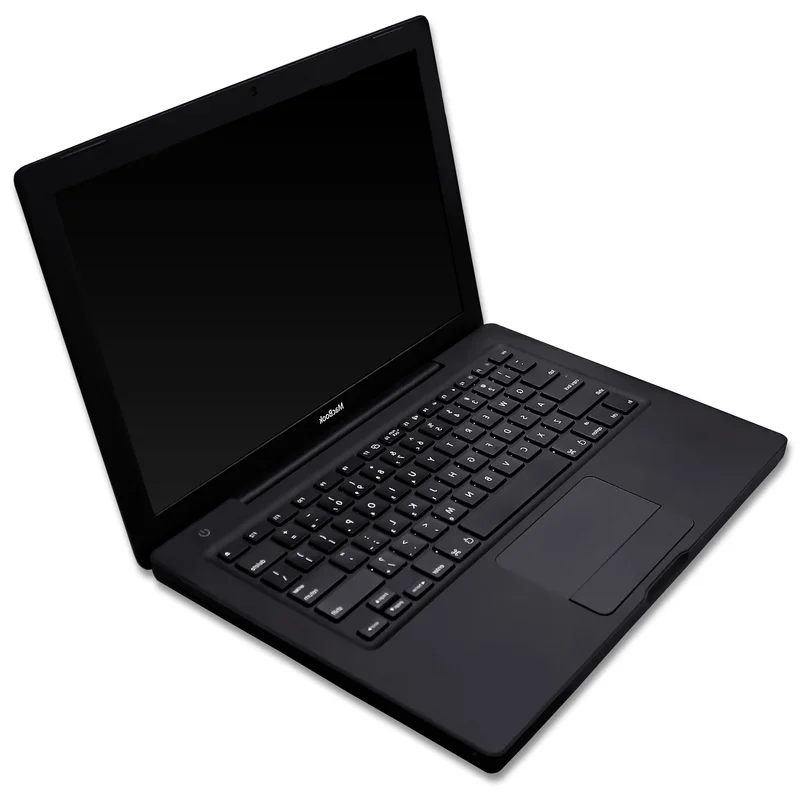
MacBook (12", 2015)
Thinnest and lightest Mac ever. Introduced the butterfly keyboard and a single USB-C port.
Apple asked what a laptop would look like with thinness as the only goal, and then shipped the answer. 13.1mm thick and about two pounds, the thinnest and lightest Mac ever made. Getting there meant Intel's fanless Core M Broadwell chips at 1.1 to 1.3GHz, which let Apple remove the cooling fan entirely and produce a completely silent computer. Silence cost speed. Core M was noticeably slow next to the standard-voltage processors in the Air and the Pro, and this machine suited writing, browsing and light work rather than anything demanding. One USB-C port did charging, video and data, which put early buyers into a world of dongles years before anyone else had USB-C. Two other things debuted here. The butterfly keyboard, with far less key travel, which Apple then put in the MacBook Pro where dust and crumbs turned it into the most complained-about keyboard the company has made. The Force Touch trackpad also arrived, which does not move at all and convinces you that it does. Reviewers split between admiring the engineering and pointing out that an Air cost the same and did more.
Mac History Timeline
Full Specifications
Availability
Processor
Memory
Storage
Display
Graphics
Expansion
Connectivity
Physical
Processor Deep Dive
Intel Core M (Broadwell-Y)
IntelThis fanless dual-core Broadwell-Y chip was designed from the ground up for extreme thermal envelopes as low as 4.5 watts, prioritizing silence and battery life over raw speed. Compared to AMD's mobile APUs of the time, Intel's Core M offered better efficiency and graphics per watt, but its low clock speeds made it noticeably slower than standard-voltage Core i5/i7 chips used in competing thin laptops. It represented Intel's most aggressive low-power x86 design to date, a precursor to the ultra-efficient mobile chip philosophy Apple Silicon would later perfect.
Compatible Operating Systems
OS X Yosemite 10.10.3
Launch OS2015
Launched alongside this all-new fanless 12-inch MacBook design.

OS X El Capitan 10.11
Compatible2015
Brought performance and stability refinements later that same year.

macOS Sierra 10.12
Compatible2016
Added Siri support to the thin-and-light MacBook lineup.

macOS High Sierra 10.13
Compatible2017
Introduced APFS, well suited to this model's SSD-only storage.

macOS Mojave 10.14
Compatible2018
Added Dark Mode support for the Retina display.

macOS Catalina 10.15
Compatible2019
One of the last releases with full official support for the earliest Core M model.

macOS Big Sur 11
Max Supported2020
The final officially supported macOS version for the 2015 12-inch MacBook.
Reviews & Reception
The 12-inch MacBook drew admiration for its unprecedented thinness and silent operation but mixed reactions to its single port, Core M performance, and new keyboard feel.
Holding this MacBook feels like holding the future, impossibly thin and completely silent. But that single USB-C port is going to be a genuine daily hassle for a lot of people.
Apple has built something beautiful and almost absurdly portable, but the Core M processor means you're trading real performance for that thinness.
The new butterfly keyboard takes real getting used to, with far less travel than any Mac keyboard before it. Some will love the stability, others will miss the depth.
This is Apple showing off what's possible when thinness is the only goal. It's an impressive engineering exercise, though not the machine we'd recommend for demanding work.