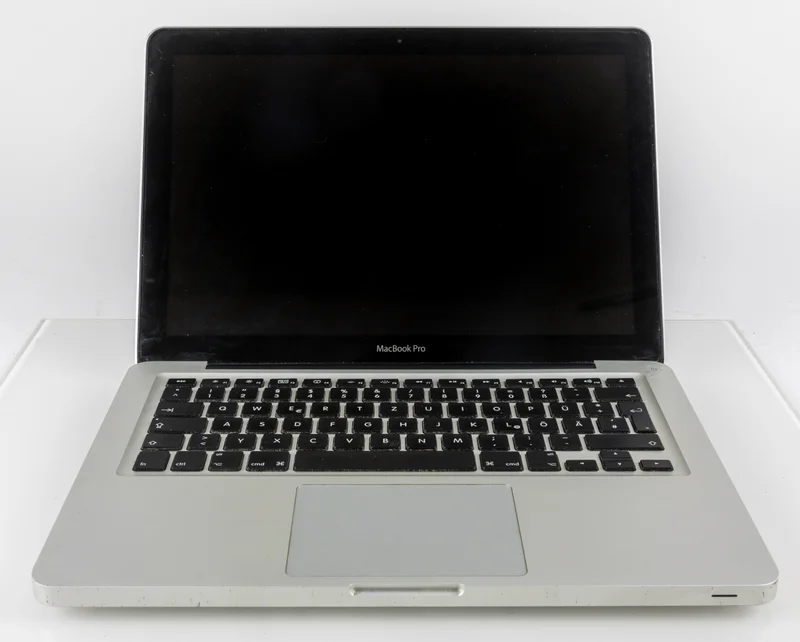
MacBook Pro (Mid 2009)
Introduced the 13-inch MacBook Pro. Added SD card slot and longer battery life.
The interesting thing about the Mid 2009 refresh is what joined the range rather than what changed in it. Apple brought the unibody aluminum design down to a 13-inch MacBook Pro, replacing the plastic 13-inch MacBook, which carried on separately for a while as the cheap white option. That gave buyers CNC build quality at a price well under the 15-inch models, and reviewers repeatedly called it the best value in the entire lineup. It also got an SD card slot, the first on any Mac laptop, which mattered a great deal in 2009 when everyone had a digital camera and a pocket full of cards. FireWire 800 came too, and Core 2 Duo processors ran from 2.26 to 2.8GHz across the range. Batteries changed everywhere. Around seven hours of life, achieved partly by building them in rather than leaving them removable, which people who carried spares objected to and Apple defended as the better trade for almost everyone. They were right about most buyers. The argument did not go away. It came back considerably louder with the Retina MacBook Pro, where everything was soldered down.
Mac History Timeline
Full Specifications
Availability
Processor
Memory
Storage
Display
Graphics
Expansion
Connectivity
Physical
Processor Deep Dive
Intel Core 2 Duo (Penryn)
IntelThe Mid 2009 MacBook Pro lineup continued to use 45nm Penryn-generation Core 2 Duo processors, now spanning 2.26GHz to 2.8GHz across the 13, 15, and 17-inch models, representing a mature, well-refined point in this processor family's lifecycle just before Intel's Nehalem-based Core i5/i7 chips would arrive in Macs the following year. Paired with NVIDIA graphics options on the larger models, overall system performance was solid and dependable for the era's creative and productivity workloads. Compared to AMD's mobile offerings at the time, Intel maintained a clear performance and efficiency lead. This generation represents essentially the final major MacBook Pro refresh built around Core 2 Duo before Apple's shift to Intel's next-generation Core i-series architecture.
Compatible Operating Systems
Mac OS X 10.5 Leopard
Launch OS2009
Shipped running Leopard 10.5.7.
Mac OS X 10.6 Snow Leopard
Compatible2009
Ran very well and was widely adopted on this generation.

Mac OS X 10.7 Lion
Compatible2011
Fully supported across the 13, 15, and 17-inch models.

OS X 10.11 El Capitan
Max Supported2015
Widely cited as the official support ceiling for this generation.
Reviews & Reception
Enthusiastically received, especially the new 13-inch model, with the sealed battery as the era's main point of debate.
The new 13-inch unibody MacBook Pro might be the best value Apple has ever offered in a laptop.
An SD card slot on a MacBook Pro finally acknowledges how people actually use these machines.
Seven-hour battery life is a real achievement, though losing user-replaceability will bother some longtime Mac users.
Bringing the unibody design to the 13-inch model makes this the easiest MacBook Pro recommendation in years.