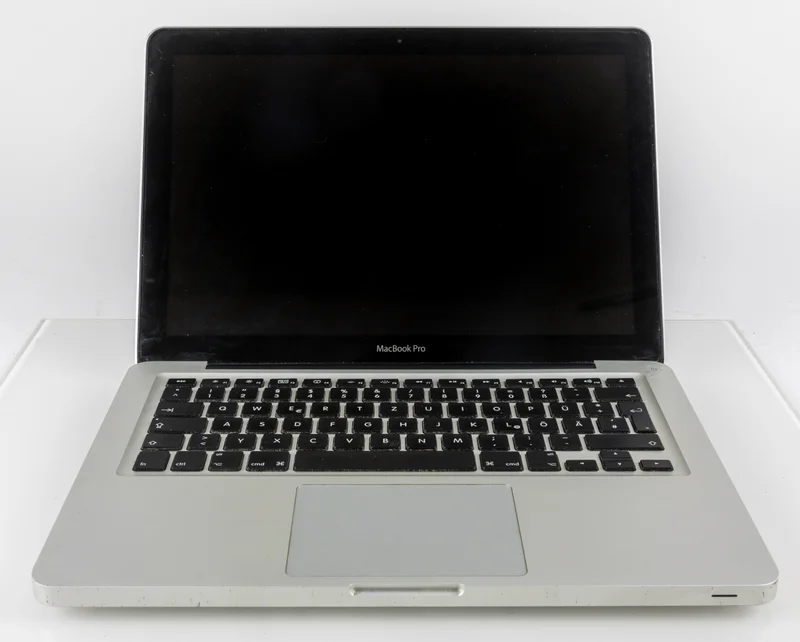
MacBook Pro Retina (Mid 2012)
Introduced the Retina display to Mac laptops. Thin, light, and breathtakingly sharp. Revolutionary design.
2880x1800 on a 15-inch laptop. At WWDC in June 2012 that was startling, and every laptop screen since has been measured against it. The chassis was rebuilt around it, considerably thinner and lighter, with no optical drive, no hard disk bay, flash storage as standard, two Thunderbolt ports and HDMI. Ivy Bridge Core i7 processors ran 2.3 to 2.7GHz with NVIDIA GeForce GT 650M graphics. Driving that many pixels was genuinely hard. Apple and third-party developers had to rebuild interface assets and rendering for the resolution, and for a while non-updated applications looked soft and blurry, exactly as they had after the iPhone 4. The press called it the best laptop display ever made and largely meant it. Then people opened one. RAM was soldered to the logic board, the SSD used a proprietary connector and was awkward to replace, and the battery was glued in rather than screwed down. iFixit gave it the lowest repairability score it had awarded a laptop and said Apple had chosen thinness over serviceability. Professionals bought it anyway. Both things it established, the display and the sealed construction, went on to define every Apple laptop that followed.
Mac History Timeline
Full Specifications
Availability
Processor
Memory
Storage
Display
Graphics
Expansion
Connectivity
Physical
Processor Deep Dive
Intel Core i7 (Ivy Bridge)
IntelIvy Bridge was Intel's 22nm die shrink and refinement of the Sandy Bridge architecture, notable for introducing 3D tri-gate transistor technology, a first for mainstream consumer processors, delivering improved power efficiency and modestly better integrated graphics performance. The Retina MacBook Pro used quad-core Ivy Bridge Core i7 chips paired with NVIDIA GeForce GT 650M discrete graphics to drive its extremely demanding high-resolution display smoothly. It maintained Intel's clear performance and efficiency lead over AMD's competing mobile processors throughout this period. Ivy Bridge's efficiency gains were essential to making the power-hungry Retina display's battery life acceptable in such a thin new chassis.
Compatible Operating Systems

OS X 10.7 Lion
Launch OS2012
Shipped running Lion 10.7.4, quickly updated to support Retina scaling properly.
OS X 10.8 Mountain Lion
Compatible2012
Released the same year and added deeper Retina display optimizations.

OS X 10.11 El Capitan
Compatible2015
Ran very well thanks to Ivy Bridge's strong efficiency and performance.

macOS 10.13 High Sierra
Max Supported2017
Widely cited as the official maximum supported release for this first Retina MacBook Pro generation.
Reviews & Reception
Praised almost universally for its groundbreaking display and slim redesign, while its soldered, glued, hard-to-repair construction sparked lasting controversy.
The Retina display is simply the best laptop screen we've ever tested, sharp enough that text looks like it's printed on paper.
Soldered RAM, a glued-in battery, and a proprietary SSD make this one of the least repairable laptops Apple has ever made.
Some apps look genuinely blurry until developers catch up with Retina-optimized assets, a real if temporary growing pain.
This is a genuinely thrilling leap forward in display technology wrapped in a beautifully thin new chassis, even if you'll never open it yourself.