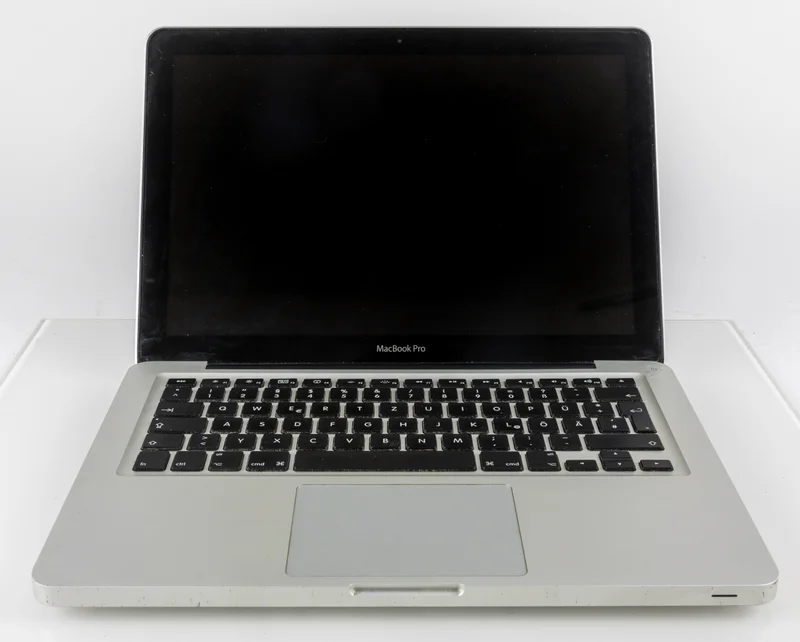
MacBook Pro 13" (M1, 2020)
M1 in the classic 13" body with extraordinary battery life and performance gains.
The first Apple Silicon machine allowed to call itself Pro, in the same case as the Intel one it replaced. Everything that mattered was inside. M1 with an 8-core CPU and up to 8-core GPU on a 5-nanometer process, posting multi-core numbers that matched far more expensive actively cooled Intel workstation laptops, and running up to 20 hours on a charge against roughly half that from its predecessor. It kept a fan, unlike the Air, and reviewers kept noting that they never heard it, because compilations and exports that had the Intel model screaming passed here in silence. Memory capped at 16GB, which worried professionals used to specifying 32 or 64. In practice the machine handled demanding work with far less strain than that number suggests. Final Cut, Logic and a fast-growing set of creative tools shipped native at launch, with render times that embarrassed much pricier Intel competition. Rosetta 2 covered everything else with little noticeable cost. This is the machine that sold Apple Silicon to skeptical professionals on performance rather than battery life.
Mac History Timeline
Full Specifications
Availability
Processor
Memory
Storage
Display
Graphics
Expansion
Connectivity
Physical
Processor Deep Dive
Apple M1
AppleThe same 5nm M1 system-on-chip used in the MacBook Air, here paired with active cooling that allowed slightly more sustained performance under heavy, prolonged workloads like video export and code compilation. Its 8-core CPU, 7- or 8-core GPU, and unified memory architecture delivered performance-per-watt far beyond any contemporary Intel or AMD x86 mobile chip, letting this 13-inch Pro rival much larger, hotter-running Intel workstation laptops despite its compact chassis. This was the chip that convinced skeptical creative professionals the Apple Silicon transition was a genuine performance leap, not merely an efficiency play.
Compatible Operating Systems

macOS Big Sur 11.0.1
Launch OS2020
Launched as the first macOS built to natively support Apple Silicon Macs.

macOS Monterey 12
Compatible2021
Brought Universal Control and improved Shortcuts support to the M1 Pro.

macOS Ventura 13
Compatible2022
Added Stage Manager and continuity camera features.

macOS Sonoma 14
Compatible2023
Continued full support with desktop widgets and gaming improvements.

macOS Sequoia 15
Compatible2024
Brought many Apple Intelligence features to this original Apple Silicon Pro.
macOS Sequoia 15
Compatible2025
Remains actively supported and updated as of the most recent macOS releases.
Reviews & Reception
The 13-inch M1 MacBook Pro earned overwhelmingly enthusiastic reviews, cementing Apple Silicon's reputation as a genuine leap for professional workloads, not just battery life.
It's genuinely hard to overstate how good this chip is. A fanless-adjacent 13-inch laptop is matching or beating Intel machines that need loud, power-hungry cooling to hit similar numbers.
Apple just delivered the biggest leap in Mac performance and battery life I've ever tested, and it did it in a chassis that looks almost identical to last year's model.
Sixteen gigabytes of RAM sounded like a limitation on paper, but in real professional use this machine handles demanding creative workloads with surprising grace.
This is the machine that will convince skeptical professionals Apple Silicon is real. Native app performance here is simply on another level from the Intel generation.