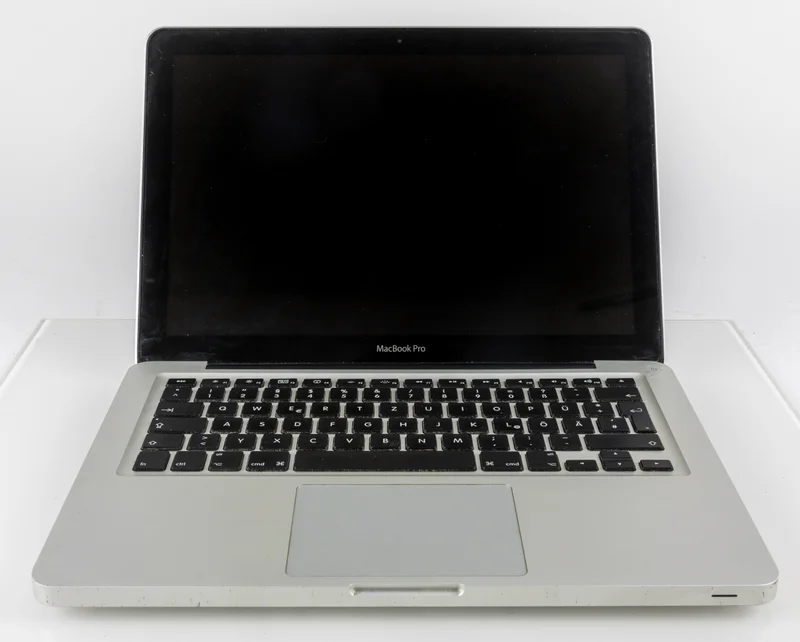
MacBook Pro (Early 2011)
Sandy Bridge MacBook Pros with Thunderbolt. The 17-inch was discontinued a year later.
Sandy Bridge and Thunderbolt arrived together in February 2011, and this generation got both. The Core i5 and i7 processors were a substantial step past the Arrandale chips before them, with better integrated graphics, more performance per core and better efficiency, and reviewers called it one of the largest single-generation speed jumps the MacBook Pro had managed. Thunderbolt came across the whole range in the same cycle as the iMac, putting these among the first Macs to carry it. Almost no peripherals existed yet, which was the tax on being early. All three sizes were updated, and the 15 and 17-inch configurations paired Sandy Bridge with discrete AMD Radeon graphics for anyone doing serious creative work. There is a quieter distinction here. Apple killed the 17-inch MacBook Pro about a year later and has never made another, so this is the last full generation that included one, and video and photo people who wanted the screen area have been complaining ever since. The Retina redesign arrived in mid-2012 and changed everything, which makes this the best of the classic unibody machines and the end of them.
Mac History Timeline
Full Specifications
Availability
Processor
Memory
Storage
Display
Graphics
Expansion
Connectivity
Physical
Processor Deep Dive
Intel Core i5 / Core i7 (Sandy Bridge)
IntelSandy Bridge brought a major architectural overhaul to the MacBook Pro lineup, unifying CPU and graphics on a single die and delivering substantial gains in both raw computation and integrated graphics performance compared to the previous Arrandale-based generation. The 13-inch models used dual-core chips while 15 and 17-inch models moved to genuine quad-core Sandy Bridge processors, often paired with discrete AMD Radeon graphics for demanding workloads. It offered a clear performance and efficiency advantage over AMD's competing mobile processors of the era. Sandy Bridge is widely regarded as one of the most successful and long-lived Intel architectures, and machines built on it remained genuinely useful for years after release.
Compatible Operating Systems
Mac OS X 10.6 Snow Leopard
Launch OS2011
Shipped running Snow Leopard 10.6.6.

Mac OS X 10.7 Lion
Compatible2011
Released the same year and widely adopted on this generation.

OS X 10.9 Mavericks
Compatible2013
Ran very well thanks to Sandy Bridge's strong performance and efficiency.

OS X 10.13 High Sierra
Max Supported2017
Widely cited as the official maximum supported release for this MacBook Pro generation.
Reviews & Reception
Regarded as one of the strongest MacBook Pro refreshes of the unibody era, driven by major Sandy Bridge performance gains and Thunderbolt's debut across the line.
This is one of the biggest generational leaps we've seen in the MacBook Pro line, Sandy Bridge changes everything about how these machines perform.
Thunderbolt's arrival alongside a genuine quad-core option on the 15 and 17-inch models makes this an easy generation to recommend.
Discrete AMD graphics paired with Sandy Bridge give the higher-end models real credibility for creative professionals.
Peripherals for Thunderbolt remain scarce for now, but the processor gains alone justify the upgrade.