MacBook Air (M3, 2024)
M3 Air adds dual external display support for the first time. Same stunning design with Wi-Fi 6E.
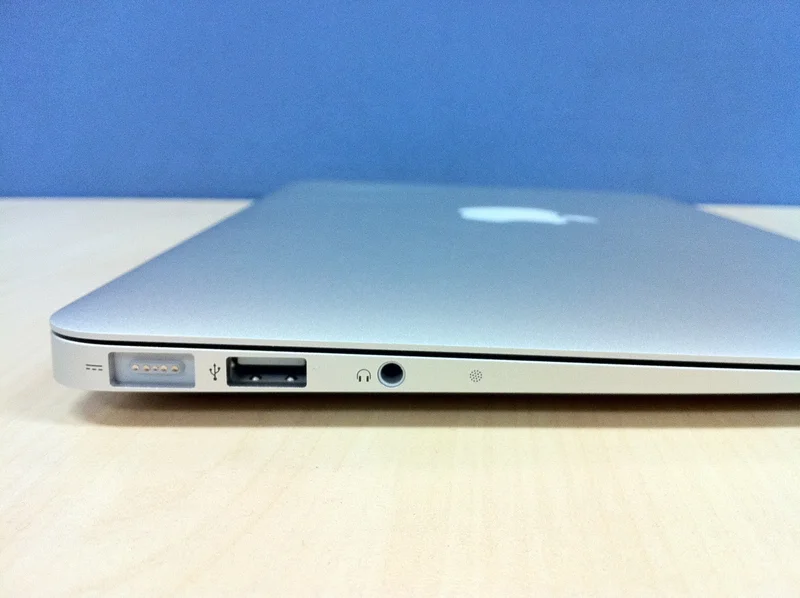
A quiet update that fixed one genuinely annoying limitation. The Air could finally drive two external displays with its own screen still running. Every Apple Silicon Air before it could manage one, which had pushed anyone needing a proper multi-monitor desk toward a MacBook Pro they did not otherwise want. Nothing else changed. Same 13.6 and 15-inch options, same MagSafe, same flat sides, same Midnight that shows every fingerprint. M3 on a 3-nanometer process brought modest CPU and GPU gains and hardware ray tracing, which matters more to enthusiasts than to the Air's actual audience of students and writers. Reviewers were warm rather than excited, correctly identifying the display support as the real story for the people it affected, and noting that anyone upgrading from an M1 or M2 would feel very little difference day to day. The Air remained Apple's best-selling laptop and the one most people should buy, with one fewer reason to spend more.
Mac History Timeline
Full Specifications
Availability
Processor
Memory
Storage
Display
Graphics
Expansion
Connectivity
Physical
Processor Deep Dive
Apple M3
AppleBuilt on TSMC's 3nm process, this M3 configuration offered an 8-core CPU and up to a 10-core GPU with hardware-accelerated ray tracing and dynamic caching, modest but real gains over M2 while remaining entirely fanless in the Air's thin chassis. Compared to contemporary Intel Core Ultra and AMD Ryzen mobile chips, M3 maintained Apple Silicon's strong efficiency lead, and its improved display controller finally enabled the Air to drive two external monitors simultaneously alongside its built-in screen, addressing a long-standing feature gap versus the MacBook Pro line.
Compatible Operating Systems

macOS Sonoma 14.3.1
Launch OS2024
Launched as the debut OS for the M3 MacBook Air.

macOS Sequoia 15
Compatible2024
Brought Apple Intelligence features fully supported by this M3 hardware.
macOS Sequoia 15
Compatible2025
Remains actively supported and updated as of the most recent macOS releases.
Reviews & Reception
The M3 MacBook Air was well received primarily for finally adding dual external display support, with the underlying chip upgrade seen as a solid but modest improvement.
Dual external display support is the feature Air buyers have been asking for since the M1 model launched, and it's genuinely great to see Apple finally deliver it.
M3 brings modest, sensible gains over M2, though most everyday users won't notice a huge difference unless they specifically need the new display flexibility.
This remains the laptop we recommend to almost everyone, and closing the multi-monitor gap with the Pro line only strengthens that case.
It's a quiet update on the surface, but for anyone who wanted a proper two-monitor setup without buying a MacBook Pro, this is exactly the fix they were waiting for.