MacBook (2006)
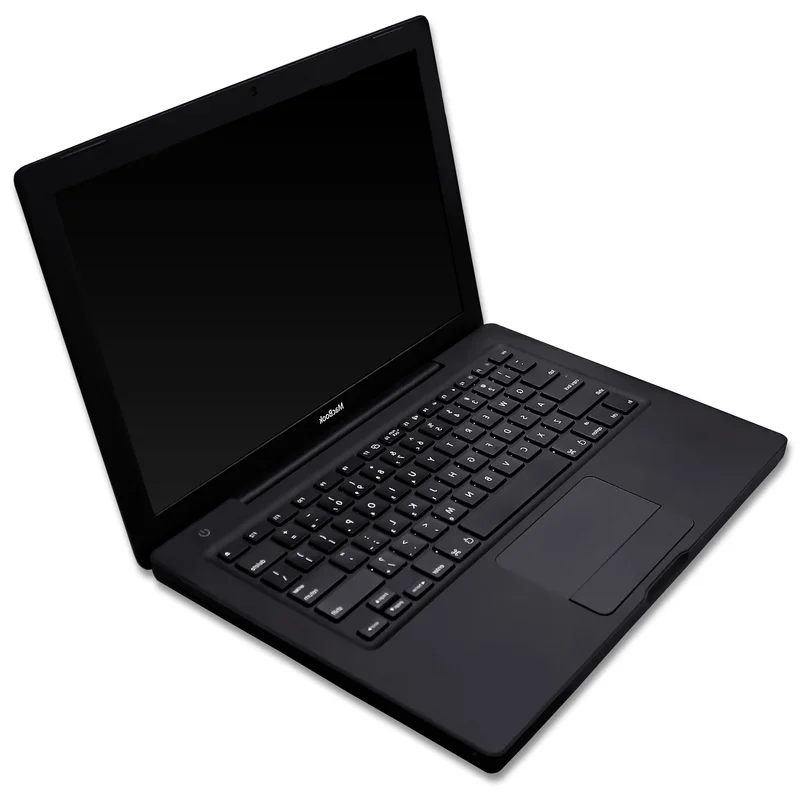
Replaced the iBook G4. Apple's mainstream consumer laptop, first with a glossy display option.
Apple retired the iBook name in May 2006 and called the consumer laptop a MacBook, which made the lineup legible for the first time in years. White polycarbonate, or black at a premium people noticed and paid anyway. There was a glossy display option that made colors look better and showed every fingerprint and every window behind you, and a trackpad that did two-finger scrolling out of the box, which Windows laptops took years to match. Core Duo, later Core 2 Duo, from 1.83 to 2.4GHz. Against the G4 iBooks this was an enormous jump, and MagSafe came down from the MacBook Pro within months. It sold extraordinarily well. Students and switchers bought them, education pricing helped, and the Mac versus PC advertising was running at full volume. The faults were real. The black model ran warm and scuffed, the plastic palm rests yellowed and cracked often enough that Apple ran an extended repair program, and the fan was loud under load. For a while this was the best-selling notebook Apple had ever made, outselling the Pro. A white MacBook in a coffee shop was what the brand looked like, right up until the iPhone took the job over.
Mac History Timeline
Full Specifications
Availability
Processor
Memory
Storage
Display
Graphics
Expansion
Connectivity
Physical
Processor Deep Dive
Intel Core Duo / Core 2 Duo
IntelThe original MacBook launched with Intel's Core Duo (Yonah) chip and was quickly refreshed later in 2006 with the newer Core 2 Duo (Merom), which added 64-bit instruction support and improved performance per clock. This made the mid-2006 refreshed MacBook meaningfully more future-proof than its Core Duo launch counterpart in terms of OS longevity. Compared to contemporary budget PC laptops running Pentium or early Core-branded Intel chips, the MacBook offered a notably more refined, quiet, and efficient computing experience. It cemented Intel's dual-core mobile architecture as the standard for mainstream consumer laptops for years to come.
Compatible Operating Systems

Mac OS X 10.4 Tiger
Launch OS2006
Shipped with Tiger 10.4.6, the first OS release to support the new MacBook.
Mac OS X 10.5 Leopard
Compatible2007
Ran smoothly on both Core Duo and Core 2 Duo configurations.
Mac OS X 10.6 Snow Leopard
Max Supported2009
Core Duo units capped here; Core 2 Duo revisions could sometimes push further with later Mac OS updates depending on exact model.

Mac OS X 10.7 Lion
Compatible2011
Only the later Core 2 Duo 64-bit revisions of the 2006 MacBook could officially run Lion; original Core Duo units could not.
Reviews & Reception
A commercial and critical hit prized for value and performance, despite well-documented build quality quirks.
The MacBook takes everything we loved about the iBook and doubles down, at a price that finally makes sense for switchers.
The glossy black model looks sharp out of the box but shows every fingerprint and scuff within weeks.
This is the laptop that could finally convert PC loyalists, combining strong performance with an approachable price tag.
Fan noise under load and some early reports of cracking palm rests are real annoyances, but overall this is a hugely capable machine.