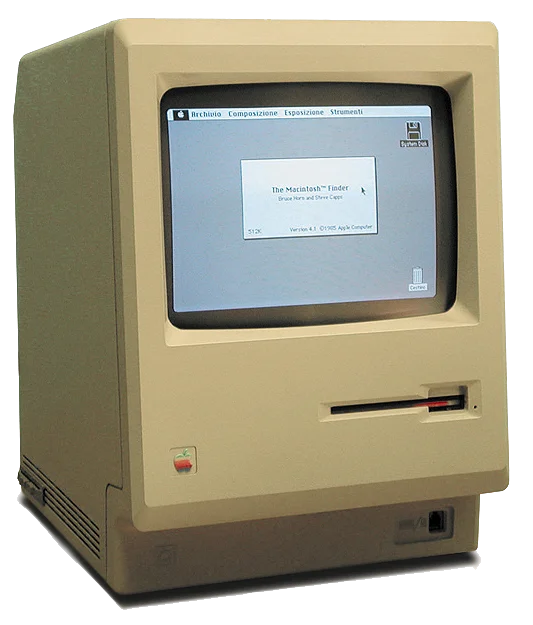
Macintosh 512Ke
Budget Mac 512K with an 800KB double-density floppy drive and 128K ROM borrowed from the Mac Plus.
Apple introduced the 512Ke on April 14, 1986, the same day as the Macintosh Plus, and its job was to sit underneath it. Take a 512K, give it the Plus's 800K double-sided floppy drive and the Plus's 128K ROM, sell it cheaper. That was the whole product. The e meant enhanced. The new ROM brought double-sided floppy support and the Hierarchical File System across from the Plus, which is what let the machine run newer System releases without choking. Storage doubled. Nothing else moved. Outside it was a 512K, same beige case and 9-inch screen, and inside the processor was still a 7.83MHz 68000, so nobody bought one for speed. What the 512Ke bought you was compatibility with the software actually shipping in 1986, at a price below the Plus and without the SCSI port or the other Plus refinements. Schools took it. So did students and anyone for whom the gap between the two prices was the deciding factor, which was rather the point. Reviewers largely ignored it, having just been handed the Plus to write about. Apple kept selling it into 1987 as the cheapest way into a Macintosh. It is the first clear case of Apple building a cheaper model by taking things out of an existing one rather than retiring the old machine, which became standard practice.
Mac History Timeline
Full Specifications
Availability
Processor
Memory
Storage
Display
Graphics
Expansion
Connectivity
Physical
Processor Deep Dive
Motorola 68000
MotorolaThe 512Ke used the same 7.83MHz Motorola 68000 found in every compact Mac since 1984, offering no CPU-level performance changes over the 512K. Its improvements came entirely from updated ROM firmware that unlocked support for double-sided floppy disks and the Hierarchical File System. The chip's simple, well-documented architecture continued to make it easy for developers to target across multiple Mac models of differing capability. By 1986 it was already showing its age against faster 68000 variants and the emerging 68020.
Compatible Operating Systems
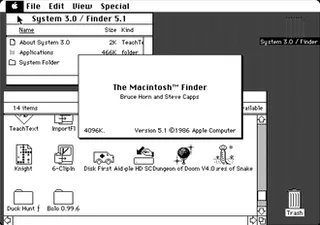
System 3.2
Launch OS1986
Shipped with the 512Ke, adding HFS support enabled by its new ROMs.
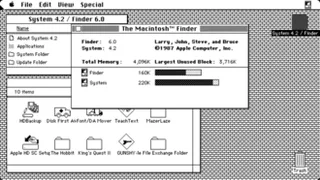
System 4.1
Compatible1987
Ran acceptably given the fixed 512K memory ceiling.
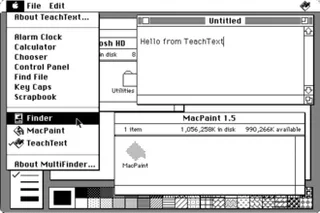
System 6.0.3
Max Supported1988
About the practical limit before memory constraints made the system sluggish.
Reviews & Reception
Seen as a sensible but unexciting budget option, valued mainly for its improved disk compatibility over the original 512K.
The 512Ke gives budget buyers the modern conveniences of the Plus's disk format without the added cost, a sensible if unglamorous update.
Little more than a 512K with a better floppy drive, but that alone makes it worth considering over the original for new buyers.
It is hard to get excited about a stopgap machine, though the improved storage compatibility is a welcome and overdue change.
For students and schools on a budget, the 512Ke remains the most affordable legitimate way into the Macintosh world.