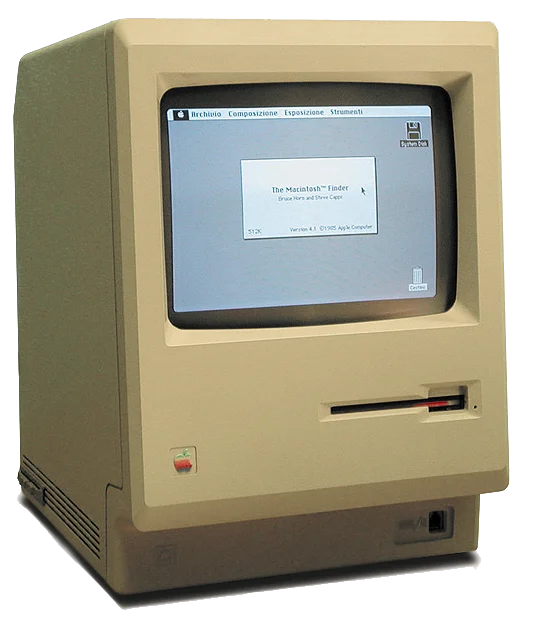
Macintosh 512K
Nicknamed the 'Fat Mac', it offered 4× the RAM of the original, making serious work finally possible.
The Macintosh 512K shipped on September 10, 1984, eight months after the original, and it existed to answer one complaint. The first Mac did not have enough memory. This one had four times as much, 512 kilobytes, which was finally enough to hold a complex document, run more demanding software, and keep a couple of desk accessories open without the machine falling over. Nothing changed outside. Same Manock case, same 9-inch monochrome screen, same single 400K floppy, same 7.83MHz 68000. Press and engineers both started calling it the Fat Mac, and the name stuck because the difference was entirely internal and entirely about how the thing felt to use. Bigger third-party applications became possible once the memory was there, among them early Microsoft Word, and the Mac turned into something you could do a day's word processing or page layout on rather than a very good demonstration. The old frustrations stayed put. No internal hard drive, one floppy slot, a sealed case that made upgrades somebody else's business. Reviewers mostly treated it as the machine Apple should have shipped in January, and Apple more or less agreed by pushing 128K owners hard toward an upgrade. Around the same time the company worked out that the Mac needed networking and real storage to be taken seriously in offices, which is where AppleTalk and the hard-disk machines came from. It sold better than the 128K had, helped by a software library that was finally growing, and it carried the Macintosh through a rough stretch when Apple's leadership was tearing itself apart and nobody could say where the company was heading. Apple kept selling it until the Macintosh Plus arrived in January 1986.
Mac History Timeline
Full Specifications
Availability
Processor
Memory
Storage
Display
Graphics
Expansion
Connectivity
Physical
Processor Deep Dive
Motorola 68000
MotorolaIdentical to the chip used in the original 128K, the 68000 in the 512K ran at the same 7.83MHz clock speed and offered the same 32-bit internal, 16-bit external bus design. Its large, flat address space and clean instruction set made it well-loved by developers throughout the 1980s. The 512K's improvements came entirely from added RAM rather than any CPU change, underscoring how memory-starved the original design had been. This chip would remain the workhorse of Apple's compact Mac line for several more years.
Compatible Operating Systems
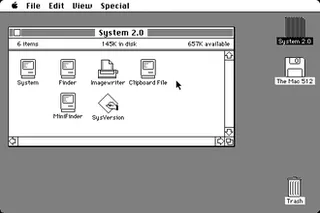
System 2.0
Launch OS1984
Shipped alongside the 512K with improved Finder features suited to the extra memory.
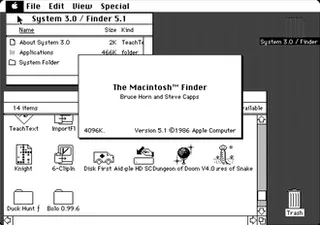
System 3.2
Compatible1986
Added support for the Hierarchical File System, usable on the 512K with care.
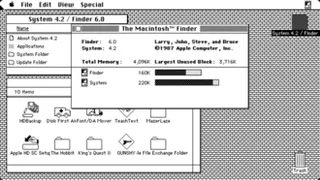
System 4.1
Max Supported1987
Roughly the practical ceiling given the 512K's fixed memory and lack of expansion.
Reviews & Reception
Reviewers welcomed the 512K as a necessary and overdue fix that finally made the Macintosh practical for real work.
The Fat Mac is the machine we all wished the original had been, with enough memory to finally run real applications without constant disk swapping.
Quadrupling the memory transforms the Macintosh from an intriguing toy into a legitimate productivity tool, though it still lags PCs in raw business software.
Apple has addressed the most glaring flaw of the original Mac, but the single floppy drive and lack of hard disk support remain serious annoyances.
For graphics and page layout work the 512K Mac has no real rival, though corporate buyers will still find the software library thin.