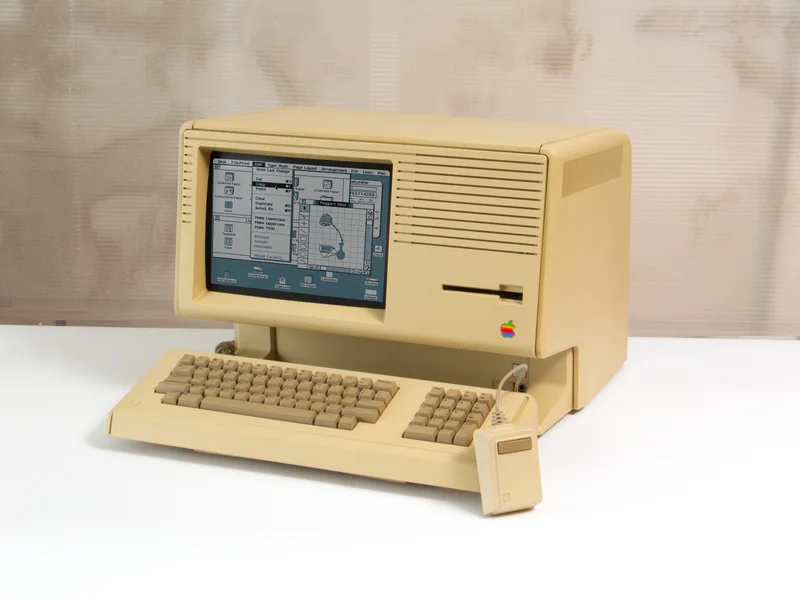
Macintosh XL
Rebranded Apple Lisa 2/10 sold briefly as a Mac-compatible workstation. Ran Mac software via the MacWorks emulator.
By early 1985 Apple had a warehouse problem. Unsold Lisa 2 machines were sitting on pallets while the Macintosh, barely a year old, was doing the thing the Lisa never managed and selling. The Mac also couldn't match what those pallets held: a 12-inch screen, an internal hard disk, memory past 512K, real multitasking. So Apple relabelled them. The Lisa 2/10, a Lisa 2 with a 10 MB internal drive, became the Macintosh XL, and an emulation layer called MacWorks let it boot something close enough to a Macintosh to run Mac software. Buyers got the bigger screen, the hard drive the Macintosh 128K didn't have, and memory expandable to 1 MB, all running real Mac applications. The catch showed up in use. MacWorks was a single-tasking approximation of System software, missing the polish and the clean compatibility that made the 128K feel like one coherent machine, and the older Lisa hardware underneath was slower and dearer than the Mac people actually wanted. Apple cut the price again. It never shook the sense of being old stock in a new box, and when the supply of Lisa parts ran out a few months later Apple stopped making it. That was the end of the Lisa line, and a strange end at that. The XL is the only Macintosh Apple ever shipped that was really a Lisa wearing a different badge. Collectors chase it for exactly that reason, and it keeps turning up in Apple histories as a company improvising its way out of an expensive mistake while the thing that saved it sold quietly on the next shelf over.
Mac History Timeline
Full Specifications
Availability
Processor
Memory
Storage
Display
Graphics
Expansion
Connectivity
Physical
Processor Deep Dive
Motorola 68000
MotorolaThe Macintosh XL retained the same 5 MHz 68000 processor as the Lisa 2 it was based on, offering more raw memory addressing capability than the contemporary Macintosh 128K's identical chip could exploit given the Mac's constrained ROM and system design. Its clean architecture made possible the emulation layer that let the XL masquerade as a true Macintosh. As with all early Apple machines, the 68000's legacy is as the workhorse that carried the company through its formative GUI era.
Compatible Operating Systems
Mac OS (via MacWorks)
Launch OS1985
Shipped running the MacWorks emulator to approximate genuine Macintosh System software.
MacWorks Plus
Max Supported1985
An updated emulation layer offering marginally better compatibility with contemporary Mac applications.
Reviews & Reception
Reviewers viewed the Macintosh XL as a clever but ultimately unconvincing stopgap, useful in the short term but obviously a way for Apple to offload leftover Lisa inventory.
An intriguing hybrid: Lisa hardware wearing a Macintosh costume, useful for those who need a bigger screen and a hard drive but willing to sacrifice true compatibility.
The emulation is clever but noticeably slower than a native Mac, and it shows Apple is simply clearing out old stock.
For the money, this is a decent way to get Lisa-caliber hardware into a Mac-software world, if you can find one before they disappear.
A transitional oddity, competent but clearly a stopgap rather than a serious new product.