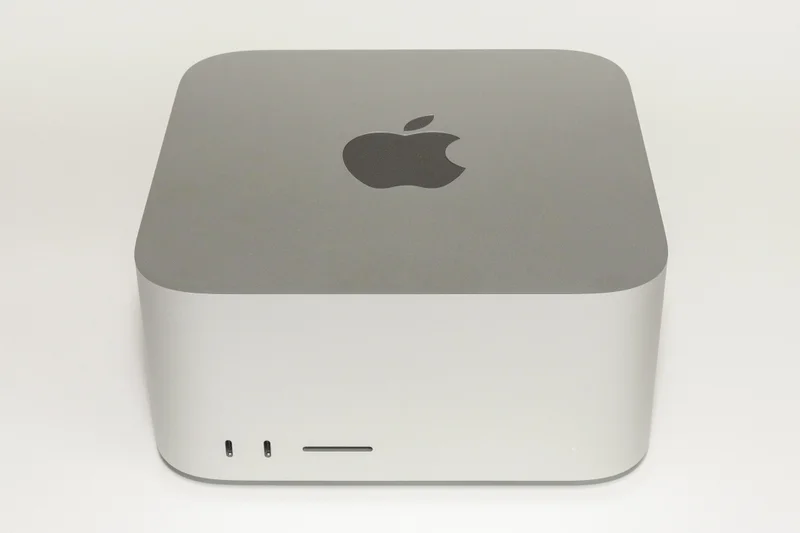
Mac Studio (M4 Max/Ultra, 2025)
M4 Ultra with unprecedented 512GB unified memory. Absolute desktop performance king at a reasonable price.
512GB of unified memory is the number that matters here. The M4 Ultra fuses two complete M4 Max dies with UltraFusion, as Apple has done since 2022, and the resulting core counts and bandwidth put this small quiet box ahead of the M2 Ultra generation on essentially every demanding benchmark. What changed is who cares. Researchers running large language models locally found that a 512GB ceiling meant loading an entire model into memory without the multi-GPU rigs that Windows and Linux workstations need for the same job. Apple noticed and leaned on it heavily in the marketing, which it had not done in 2022. The case is almost identical to the original Studio. Same footprint, same near-silence under sustained load, same thermal design doing quiet work. Reviewers called it the fastest desktop Apple sells, ahead of the Mac Pro tower for most real professional work, which raised the same question the tower has faced since 2023. The top configuration is expensive and compares well against the specialized hardware it replaces.
Mac History Timeline
Full Specifications
Availability
Processor
Memory
Storage
Display
Graphics
Expansion
Connectivity
Physical
Processor Deep Dive
Apple M4 Max / M4 Ultra
AppleM4 Ultra fuses two complete M4 Max dies via Apple's UltraFusion interposer, delivering a substantial CPU and GPU core count increase alongside support for up to 512GB of unified memory, an enormous ceiling aimed at large-scale AI and creative workloads. Compared to workstation-class Intel Xeon, AMD Threadripper Pro, and even dedicated multi-GPU Nvidia setups, M4 Ultra offers remarkable efficiency and the unique advantage of running very large models entirely within a single unified memory pool rather than across separate GPU memory banks. This chip represents the current performance peak of Apple's own-silicon strategy for desktop computing.
Compatible Operating Systems

macOS Sequoia 15.3.2
Launch OS2025
Launched as the debut OS for the M4 Max/Ultra Mac Studio.
macOS Sequoia 15
Compatible2025
Remains actively supported and updated as of the most recent macOS releases, with ongoing Apple Intelligence expansion.
Reviews & Reception
The M4 Max/Ultra Mac Studio was met with strong acclaim as Apple's new desktop performance champion, especially prized for its massive unified memory ceiling for AI workloads.
512GB of unified memory in a machine this compact and quiet is genuinely remarkable, and it opens up local AI workloads that used to require a rack of GPUs.
M4 Ultra is the fastest chip Apple has ever shipped, and running huge language models entirely in unified memory is a real, practical advantage over typical multi-GPU PC setups.
It's once again fair to ask why the Mac Pro tower exists when this quiet, compact Studio configuration beats it on nearly every practical benchmark.
This is the desktop performance king in Apple's entire lineup right now, and the thermal engineering keeping it this quiet under sustained heavy load remains seriously impressive.