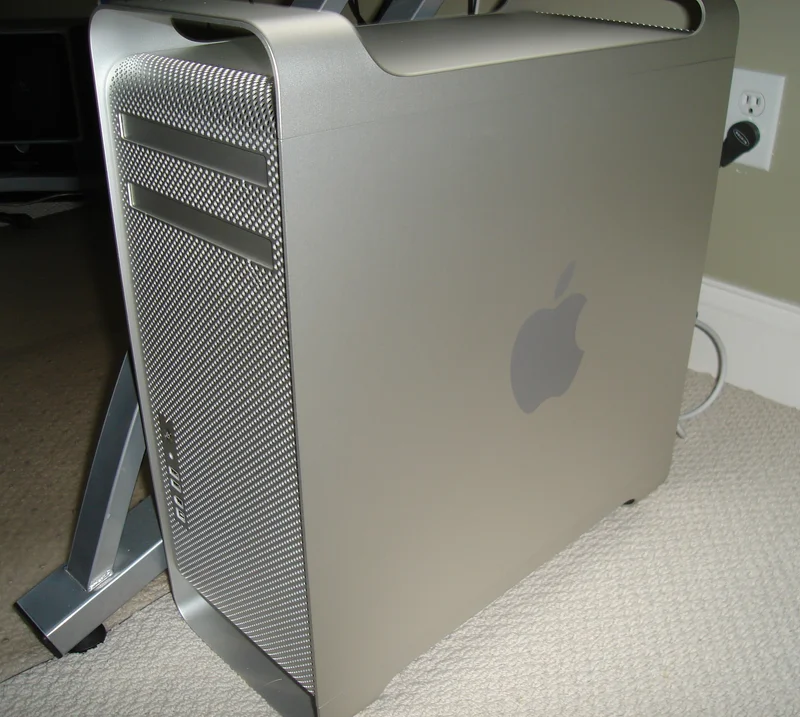
Mac Pro (M2 Ultra, 2023)
Apple Silicon in the Mac Pro chassis. Up to 192GB unified memory, 76-core GPU, PCIe expansion slots.
The last Intel Mac category made the jump, and the transition ended here. Apple kept the 2019 tower almost unchanged, perforated stainless steel and all, and fitted the same M2 Ultra that went into that year's Mac Studio. Up to a 24-core CPU, a 76-core GPU and 192GB of unified memory, beating the Xeon Mac Pro on plenty of real work while drawing a fraction of the power. Then the catch. Unified memory means the RAM cannot be upgraded after purchase, and the graphics are part of the chip, so you cannot fit a new card in three years. The PCIe slots that remain take storage, networking and specialist cards, not GPUs. For a machine whose entire proposition for twenty years was that you could keep improving it, that is a substantial loss. It also created an awkward question. A Mac Studio with the identical chip delivers nearly the same performance in a much smaller and much cheaper box, so what is the tower for. Reviewers asked exactly that, praised the silicon, and mostly could not answer it.
Mac History Timeline
Full Specifications
Availability
Processor
Memory
Storage
Display
Graphics
Expansion
Connectivity
Physical
Processor Deep Dive
Apple M2 Ultra
AppleM2 Ultra fused two complete M2 Max dies via Apple's UltraFusion interposer, delivering up to a 24-core CPU and 76-core GPU with support for a massive 192GB of unified memory, the same chip used in the 2023 Mac Studio. Compared to Intel Xeon W and AMD Threadripper Pro workstation chips, M2 Ultra offered dramatically better efficiency and strong creative-application performance, though its fixed, non-expandable unified memory architecture represented a genuine departure from the upgradeable RAM and GPU model workstation buyers were accustomed to. This chip completed Apple's multi-year journey moving the entire Mac lineup off Intel silicon.
Compatible Operating Systems

macOS Ventura 13.4
Launch OS2023
Launched as the debut OS for the Apple Silicon Mac Pro.

macOS Sonoma 14
Compatible2023
Arrived just months after launch with desktop widgets and gaming improvements.

macOS Sequoia 15
Compatible2024
Brought Apple Intelligence features to this workstation-class tower.
macOS Sequoia 15
Compatible2025
Remains actively supported and updated as of the most recent macOS releases.
Reviews & Reception
The M2 Ultra Mac Pro completed Apple's Apple Silicon transition but drew mixed reactions over its limited expansion versus the far cheaper, similarly powerful Mac Studio.
This completes Apple's silicon transition, but it's hard not to ask who this specific tower is really for when the Mac Studio offers nearly identical performance for so much less.
M2 Ultra is an extraordinary chip, but losing GPU and RAM upgradeability is a real philosophical break from what the Mac Pro tower has always represented to professionals.
The cheese-grater chassis looks as good as ever, and the performance-per-watt is remarkable, but the practical case for choosing this over the Studio is genuinely thin for most buyers.
This is a technically impressive capstone to the Apple Silicon transition, even if it leaves some of the Mac Pro's most loyal expansion-hungry users wanting more.