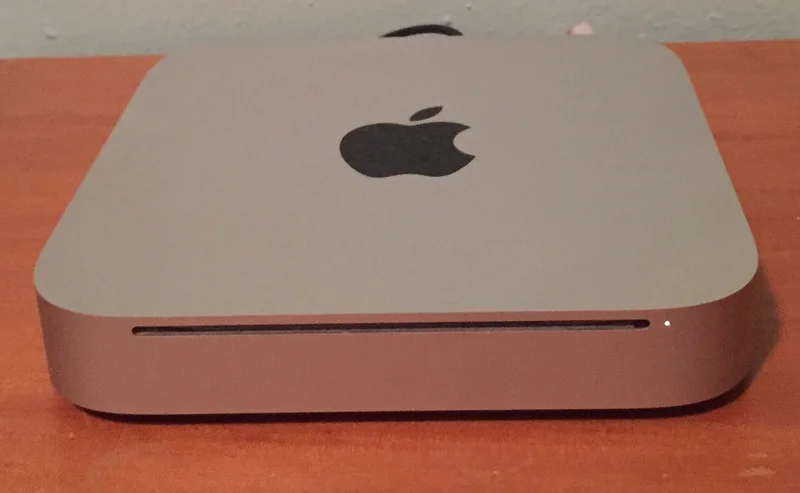
Mac mini (Intel, 2006)
First Intel Mac mini. Retained compact form factor but gained huge performance from Intel chip.
Apple updated the mini to Intel on February 28, 2006 without changing the case or raising the price. A Core Solo at 1.5GHz or a Core Duo at 1.66GHz. The Core Solo made this the cheapest Intel Mac you could buy, which was the point, and buyers learned quickly that the dual-core model was worth the difference. Against the G4 mini it replaced, everyday work got substantially quicker. Web browsing, iLife and juggling several applications all improved. Integrated GMA 950 graphics were adequate and no more, which has been the standing complaint about every mini since. Front Row and an infrared receiver arrived quietly, and a lot of these ended up under televisions doing a job Apple had not quite admitted to designing them for. A minor machine. It mattered. It finished the consumer desktop half of the Intel transition, and it kept the cheapest route into the Mac exactly where it had been.
Mac History Timeline
Full Specifications
Availability
Processor
Memory
Storage
Display
Graphics
Expansion
Connectivity
Physical
Processor Deep Dive
Intel Core Solo / Core Duo
IntelThe 2006 Mac mini offered a choice between the single-core Core Solo and dual-core Core Duo, both members of Intel's Yonah family built on a 65nm process. The Core Solo was effectively a Core Duo with one core disabled, giving Apple an ultra-budget entry chip for its cheapest desktop. Against contemporary low-cost PC desktops running Celeron or budget Pentium chips, the Core Duo mini in particular offered surprisingly strong multitasking performance for its size and price. Neither variant supported 64-bit computing, a limitation that would define the ceiling of this machine's future OS compatibility.
Compatible Operating Systems

Mac OS X 10.4 Tiger
Launch OS2006
Launched running Tiger 10.4.5 built for Intel.
Mac OS X 10.5 Leopard
Compatible2007
Supported, though the integrated GMA 950 graphics limited some visual effects.
Mac OS X 10.6 Snow Leopard
Max Supported2009
Final supported release due to the 32-bit-only Yonah processors.
Reviews & Reception
Seen as a welcome, fairly priced continuation of the Mac mini formula with the expected integrated-graphics caveats.
Apple didn't change the formula, just the engine, and the Intel Mac mini remains the cheapest, easiest gateway into Mac OS X.
The Core Solo model is noticeably weaker than the Core Duo; shoppers should spend the extra money if they can.
Tiny, quiet, and now genuinely fast enough for daily use, the mini remains a clever little machine.
Integrated graphics keep this firmly out of gaming territory, but as an everyday Intel Mac on a budget, it delivers.