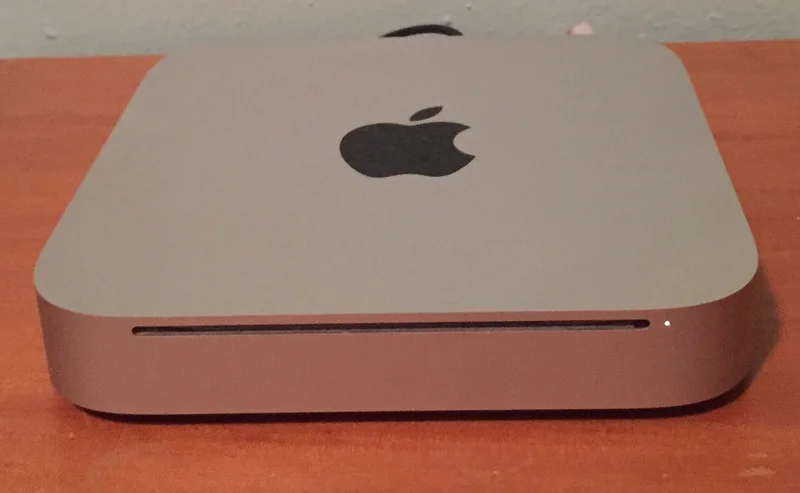
Mac mini (Late 2014)
Controversial Mac mini with soldered RAM. Entry-level dropped to $499 but lost GPU options.
The 2014 mini cut the price to $499 and quietly took things away. The quad-core option disappeared, leaving only dual-core chips across the whole range, and discrete graphics went with it. Most significantly, Apple soldered the RAM to the logic board, which ended the mini's standing as the easiest Mac to upgrade yourself. Buyers now had to guess how much memory they would want in four years, at the till, with no way back except a new logic board. The 2012 model twisted open. Enthusiasts who had been buying base configurations and upgrading them, or running cheap home servers and media boxes, took this badly and said so at length. Haswell processors from 1.4 to 3.0GHz handled everyday work fine. The ceiling had been lowered, and a price cut was doing the work of explaining why. Then Apple left the mini alone for four years. Rumors that the product was being discontinued ran for most of that time, and only stopped when the 2018 model arrived with a T2 chip and actual ambition.
Mac History Timeline
Full Specifications
Availability
Processor
Memory
Storage
Display
Graphics
Expansion
Connectivity
Physical
Processor Deep Dive
Intel Core i5/i7 (Haswell)
IntelThese dual-core, low-voltage Haswell chips ranged from a 1.4GHz base model up to a 3.0GHz configuration, trading the quad-core options of the prior generation for improved integrated graphics and power efficiency. Against AMD's contemporary APUs, Intel again held a clear single-thread performance lead, though the dual-core-only lineup was a step down in multi-threaded capability from the 2012 mini's quad-core option. Haswell's improved Iris integrated graphics were a genuine upgrade for everyday use, even without a discrete GPU option.
Compatible Operating Systems
OS X Yosemite 10.10.1
Launch OS2014
Shipped as the launch OS for the Late 2014 Mac mini.
OS X El Capitan 10.11
Compatible2015
Ran comfortably on this dual-core Haswell hardware.

macOS Sierra 10.12
Compatible2016
Added Siri support during the mini's unusually long refresh drought.

macOS High Sierra 10.13
Compatible2017
Brought APFS support for the mini's SSD and Fusion Drive configurations.

macOS Mojave 10.14
Compatible2018
Arrived the same year Apple finally refreshed the Mac mini lineup.

macOS Catalina 10.15
Compatible2019
Continued official support five years after this model's debut.

macOS Big Sur 11
Max Supported2020
The final officially supported macOS release for the Late 2014 Mac mini.
Reviews & Reception
The 2014 Mac mini was widely criticized for removing quad-core and discrete GPU options and soldering the RAM, souring its reputation despite the lower entry price.
Soldering the RAM to the board is a genuinely disappointing step backward for a machine that used to be the friendliest Mac for upgraders on a budget.
A lower starting price sounds great until you realize you've lost the quad-core option and any path to discrete graphics. This feels like a mini built for a narrower audience than before.
For basic computing and web browsing this is still a perfectly capable little Mac, but power users who loved the old mini's flexibility have real reason to be frustrated.
It's hard to celebrate a price cut when it comes bundled with the removal of features that made this machine special in the first place.