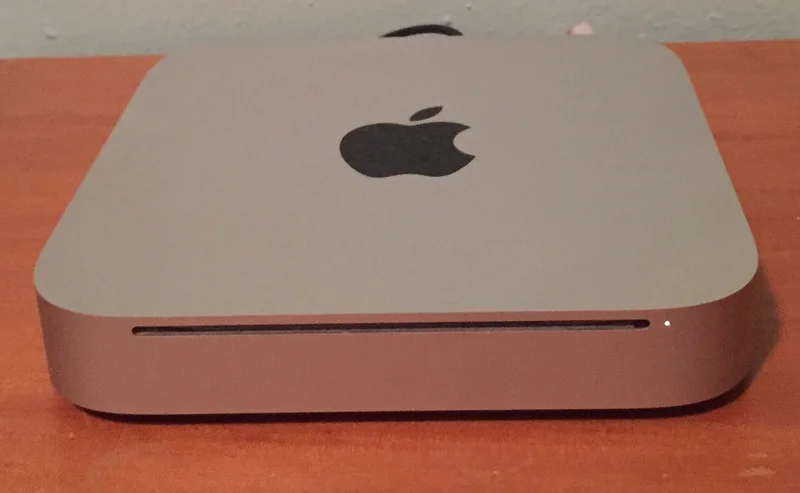
Mac mini (Early 2009)
New unibody aluminum Mac mini. Vastly improved graphics with GeForce 9400M.
The mini went unibody in March 2009, machined from a single block of aluminum like the MacBook Pro five months earlier, and stopped looking like the cheap option. The processor barely moved. A 2.0GHz Core 2 Duo, which was fine and unremarkable. Graphics were the actual upgrade. Apple dropped the Intel GMA parts that had been holding the mini back for years and fitted NVIDIA's GeForce 9400M, the same silicon as the unibody laptops, so HD video playback, light gaming and the interface effects all became genuinely smooth for the first time in the line's history. Home theater builders noticed immediately, and the small aluminum box under the television became a recognizable thing. Mini DisplayPort arrived alongside DVI. FireWire left, which annoyed anyone with an external drive or audio interface built around it, and plenty of people were. Reviewers were surprised how much difference the graphics made given how little the processor had. This shape then ran until the smaller 2010 redesign.
Mac History Timeline
Full Specifications
Availability
Processor
Memory
Storage
Display
Graphics
Expansion
Connectivity
Physical
Processor Deep Dive
Intel Core 2 Duo (Penryn)
IntelThe 2009 Mac mini used a 2.0GHz 45nm Penryn-generation Core 2 Duo processor, a modest, mature chip by this point in its lifecycle, offering reliable dual-core performance for everyday tasks. The more transformative change alongside it was NVIDIA's GeForce 9400M integrated graphics chipset, which dramatically improved the mini's video and graphics capabilities beyond what the CPU generation alone would suggest. Compared to budget PC desktops of the era, this pairing gave the mini a genuine multimedia performance edge despite unremarkable raw CPU clock speeds. It represented a mature, well-understood endpoint of the Core 2 Duo era for Apple's budget desktop.
Compatible Operating Systems
Mac OS X 10.5 Leopard
Launch OS2009
Shipped running Leopard 10.5.6.
Mac OS X 10.6 Snow Leopard
Compatible2009
Ran very well, benefiting significantly from GeForce 9400M acceleration.

Mac OS X 10.7 Lion
Compatible2011
Fully supported on this generation.

OS X 10.11 El Capitan
Max Supported2015
Commonly cited official ceiling for this Mac mini generation.
Reviews & Reception
Praised as a well-judged update, with the graphics upgrade earning the most enthusiasm and the dropped FireWire port the main gripe.
The unibody aluminum design finally makes the mini feel like a premium object rather than an afterthought.
GeForce 9400M graphics transform this from a machine you tolerate for HD video to one you'd actually choose for it.
Dropping FireWire will annoy some longtime users, but overall this is a smart, focused update.
Still the cheapest way into the Mac ecosystem, and now with graphics capability that actually matches modern expectations.