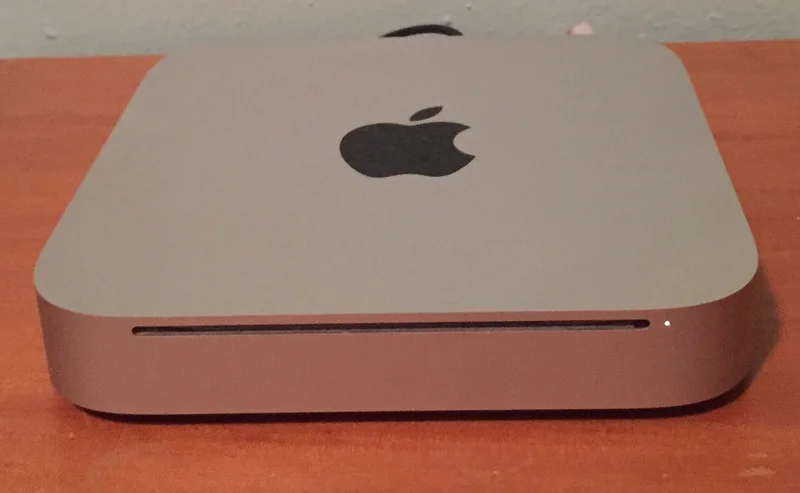
Mac mini (Mid 2007)
Updated Mac mini with Core 2 Duo and 802.11n Wi-Fi. Same white plastic case.
A quiet update in August 2007, alongside the aluminum iMac. Same white-and-silver case from 2005, Core 2 Duo at 1.83 or 2.0GHz instead of Core Duo, 802.11n, more RAM as standard. The processor change mattered more than it sounds. 64-bit support extended how long the machine stayed useful, and with faster wireless it became a considerably better media box than the model it replaced. Which is what many buyers wanted. Front Row and the bundled remote made it a living-room machine, and nobody else sold anything this small running a full desktop operating system. The complaints were the usual mini complaints. Integrated GMA 950 graphics carried over unchanged, and once you added a display, keyboard and mouse the total crept toward iMac money for considerably less computer. It is a workmanlike generation that kept the cheapest Mac current for another eighteen months, until the unibody aluminum mini arrived in 2009.
Mac History Timeline
Full Specifications
Availability
Processor
Memory
Storage
Display
Graphics
Expansion
Connectivity
Physical
Processor Deep Dive
Intel Core 2 Duo (Merom)
IntelThe 2007 Mac mini's Core 2 Duo Merom processors brought 64-bit computing to Apple's budget desktop for the first time, a meaningful upgrade over the previous Core Duo mini's 32-bit-only limitation. Clocked at 1.83GHz and 2.0GHz, they offered solid everyday performance for web browsing, office work, and media playback, though the mini's integrated GMA 950 graphics remained a bottleneck for anything graphically demanding. Compared to budget PC desktops of the era running similar Intel chips, the mini offered comparable CPU performance in a vastly smaller and quieter enclosure. The 64-bit support meaningfully extended this model's later macOS compatibility versus the outgoing Core Duo mini.
Compatible Operating Systems

Mac OS X 10.4 Tiger
Launch OS2007
Shipped running Tiger 10.4.10.
Mac OS X 10.5 Leopard
Compatible2007
Ran comfortably given the Core 2 Duo upgrade.
Mac OS X 10.6 Snow Leopard
Compatible2009
Supported thanks to 64-bit processor architecture.

Mac OS X 10.7 Lion
Max Supported2011
Official maximum supported OS for this generation of Mac mini.
Reviews & Reception
A modest, competent refresh viewed as keeping the mini current without changing its fundamental value tradeoffs.
Not a redesign, but a sensible refresh: Core 2 Duo and faster Wi-Fi keep the mini relevant for another year.
Still the cheapest way into Mac OS X, though the integrated graphics remain a clear limitation.
802.11n support is a welcome, overdue addition for a machine so often used to stream media in the living room.
Once you add a keyboard, mouse, and display, the value proposition gets murkier compared to a full iMac.