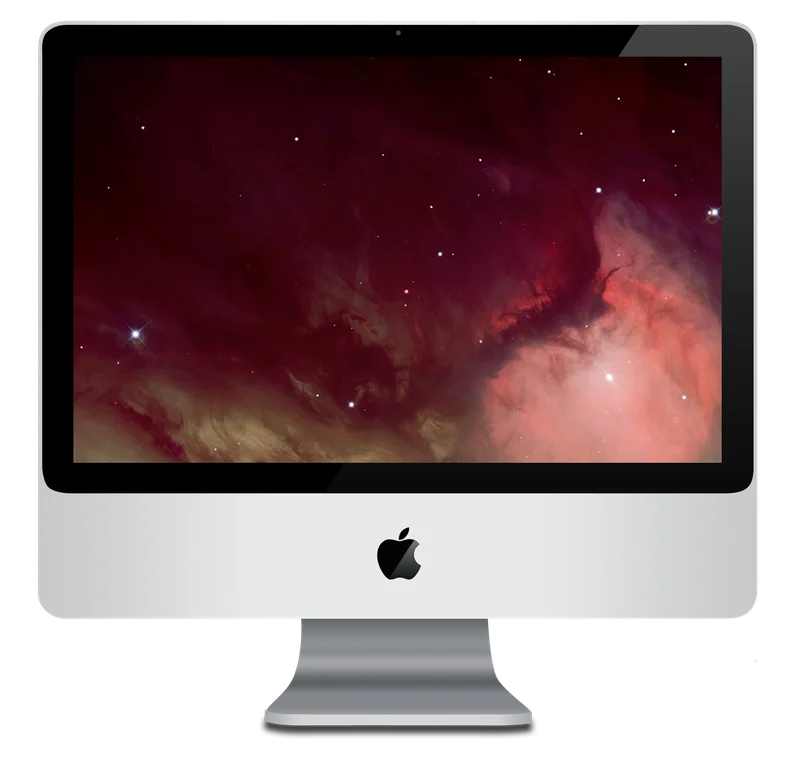
iMac Retina 5K (Late 2014)
First computer with a 5K display. Stunning visuals made it the go-to for photographers and video editors.
The first 5K computer anyone shipped. 14.7 million pixels in the 27-inch chassis Apple had been using since 2012, at a moment when no standalone 5K monitor existed to compare it against. That resolution had a specific point. You could edit 4K video at full size with the tool palettes still on screen, which nothing else on a desk could do, and photo and design work looked sharper than any rival all-in-one. Making it work was not straightforward. Apple co-developed custom timing controllers with its display partners, because no existing pipeline had been built to carry a 5K signal at 60Hz, and leaned on AMD Radeon R9 M290X and M295X graphics to drive it. Haswell Core i5 and i7 chips from 3.5 to 4.0GHz gave healthy efficiency gains over the Ivy Bridge iMac, and Fusion Drive remained popular. Reviewers treated it as a new category rather than a refresh, much the way the Retina MacBook Pro had gone two years earlier. Photographers and editors bought them immediately. The strain showed in two places. Mobile-derived graphics were working hard to drive that panel, and the machine was less serviceable than ever.
Mac History Timeline
Full Specifications
Availability
Processor
Memory
Storage
Display
Graphics
Expansion
Connectivity
Physical
Processor Deep Dive
Intel Core i5/i7 (Haswell)
IntelBuilt on Intel's refined 22nm Haswell architecture, these quad-core desktop chips improved integrated graphics and power efficiency significantly over Ivy Bridge, though the iMac relied on discrete AMD Radeon graphics to actually drive its unprecedented 5K panel. Haswell held a clear performance and efficiency lead over AMD's FX and APU lineups at the time, reinforcing Intel's grip on the premium desktop CPU market. The chip's improved memory controller and cache architecture helped feed the enormous pixel count of the new Retina 5K display.
Compatible Operating Systems
OS X Yosemite 10.10.1
Launch OS2014
Launched alongside the Retina 5K iMac and its flat visual redesign.

OS X El Capitan 10.11
Compatible2015
Improved graphics performance and window management for the 5K panel.

macOS Sierra 10.12
Compatible2016
Added Siri and Optimized Storage support to this high-resolution iMac.

macOS High Sierra 10.13
Compatible2017
Brought APFS and HEVC hardware decoding improvements.

macOS Catalina 10.15
Compatible2019
Continued full official support five years after this iMac's debut.

macOS Big Sur 11
Compatible2020
One of the last major releases to officially support this Haswell iMac.

macOS Monterey 12
Max Supported2021
The final officially supported macOS release for this model.
Reviews & Reception
The Retina 5K iMac was greeted as a landmark achievement in display technology and won near-universal acclaim from critics.
There's simply nothing else like this display on the market. Text and photos have a print-like clarity that makes every other monitor look soft by comparison.
Apple has once again shipped a display technology years before the rest of the industry could follow, and done it at a price no standalone 5K monitor could match.
The GPU has a genuinely difficult job driving all these pixels, and demanding creative workloads occasionally show the strain, but for most users the payoff is worth it.
This is the new benchmark for desktop displays, full stop. Photo and video professionals have been waiting years for something like this.