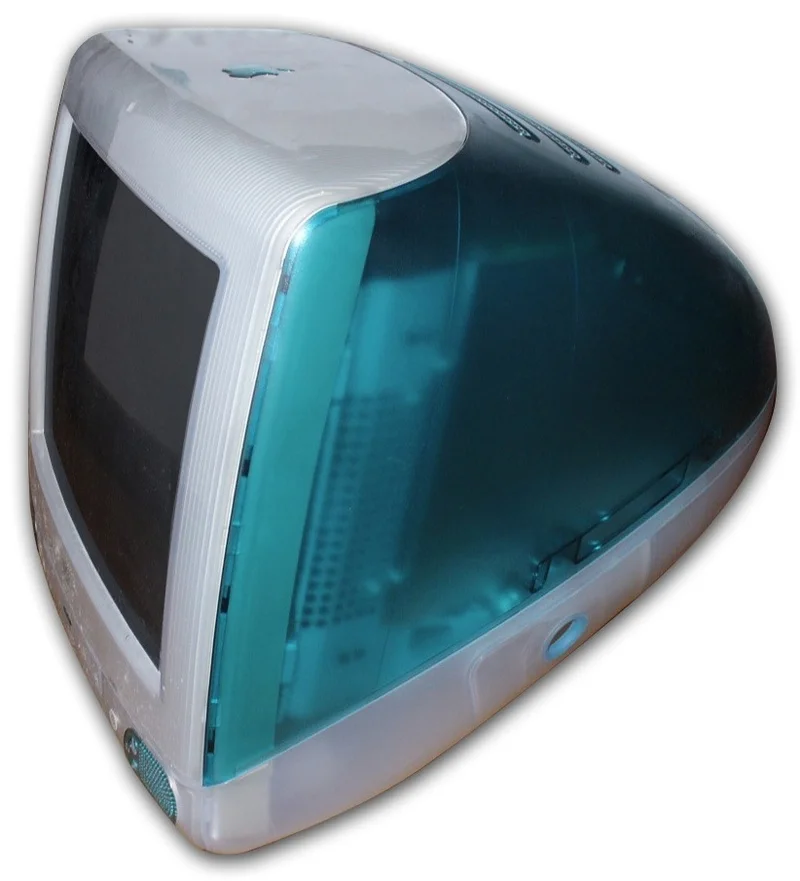
iMac G3 (Slot-Loading)
Updated iMac G3 with slot-loading CD drive, more colors, and faster processors.
Apple redesigned the iMac's insides in October 1999 and left the idea alone. The visible change was the optical drive. A slot replaced the tray, which tidied the front of the machine and felt better to use, and that is roughly the level of ambition here. Underneath, more had moved. G3 clocks eventually ran from 350 all the way to 700MHz across an unusually long production life, graphics improved, and RAM and storage ceilings rose enough to keep the design current into the Mac OS X years. The colors kept coming. Graphite, further fruit variations, then Blue Dalmatian and Flower Power, which are the two everyone remembers and the two nobody bought. New World ROM meant these ran Mac OS X natively, so slot-loading iMacs stayed in schools and homes for years after faster G4 machines had arrived, and a great many people met Apple's modern operating system on one. By this point nobody was asking whether the iMac worked. The question had become how long Apple could keep iterating on it, and the answer turned out to be most of a decade.
Mac History Timeline
Full Specifications
Availability
Processor
Memory
Storage
Display
Graphics
Expansion
Connectivity
Physical
Processor Deep Dive
PowerPC 750 (G3)
IBM/MotorolaThe PowerPC 750 G3 spanned an unusually broad range in the slot-loading iMac, from 350MHz at introduction up to 700MHz in its final revisions, reflecting continuous refinement of the chip's manufacturing process over nearly two years of production. Even at its fastest, the G3 core remained efficient and cache-friendly, though by 2000 Intel's Pentium III had narrowed much of the earlier performance gap that the original G3 had opened against the Pentium II. Its long production run and broad clock-speed range made it one of the most widely deployed processors in Apple's consumer lineup during the classic Mac OS to Mac OS X transition.
Compatible Operating Systems

Mac OS 9.0.2
Launch OS1999
Shipped standard on the slot-loading iMac at its October 1999 introduction.
Mac OS 9.1
Compatible2001
Widely installed update bringing improved networking and stability.
Mac OS 9.2.2
Compatible2001
The final and most refined classic Mac OS release available for this hardware.

Mac OS X 10.1 Puma
Compatible2001
Ran natively thanks to New World ROM architecture, giving many users their first Mac OS X experience.

Mac OS X 10.3 Panther
Max Supported2003
Generally regarded as the practical performance ceiling, especially on faster later revisions of this model.
Reviews & Reception
The slot-loading iMac was warmly received as a smart, well-executed refinement of an already-beloved design, sustaining the iMac's cultural and commercial momentum through 1999 and beyond.
The slot-loading drive is a small change that makes a big difference, and combined with new colors, this iMac refinement feels thoroughly polished.
Apple continues to iterate smartly on a winning formula; faster processors and a cleaner drive mechanism make this the iMac to buy now.
The iMac's design magic hasn't worn off, and improved specs across this generation keep it competitive with budget Windows desktops.
New colors, new patterns, new speeds, the iMac keeps finding ways to stay culturally relevant well past its debut, a rare feat in consumer tech.