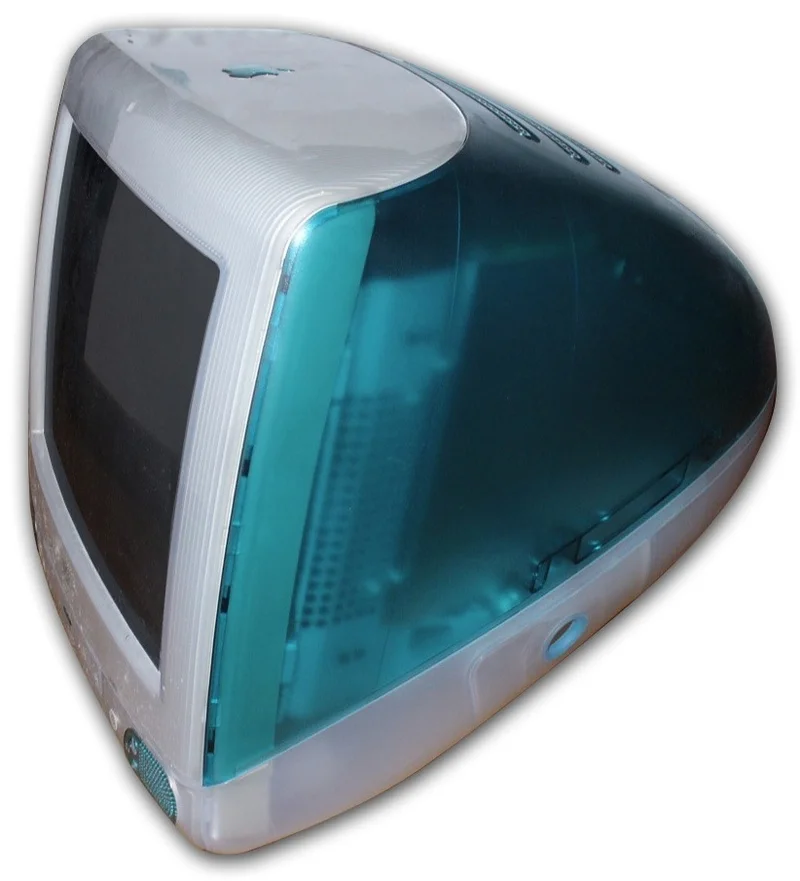
iMac G3 (Fruit Colors)
Expanded to five fruit-inspired translucent colors (Blueberry, Grape, Tangerine, Lime, Strawberry). Became a cultural icon of the late 1990s.
Five months after the Bondi Blue iMac, Apple stopped selling one color and started selling five. Blueberry, Grape, Lime, Strawberry and Tangerine, from January 5, 1999. The hardware improved at the same time. G3 clocks ran from 266 up to 400MHz across revisions, graphics got better, storage grew, and Mac OS 8.5.1 shipped on it, which answered the main complaint that the original had been underpowered for its price. The colors did the marketing. Apple sold a computer the way a company sells a fashion accessory, which nobody had tried before, and it worked well enough that the fruit iMacs turned up constantly in films and television as shorthand for modern technology. Translucent plastic then escaped computing entirely. Staplers, kettles, telephones and grills all went see-through for about three years because of this machine. Reviewers who had been skeptical of the first iMac mostly came round, noting that Apple had listened and iterated quickly rather than resting. The installed base also finished the job on USB, since enough iMacs were in schools and homes that peripheral makers had to support it.
Mac History Timeline
Full Specifications
Availability
Processor
Memory
Storage
Display
Graphics
Expansion
Connectivity
Physical
Processor Deep Dive
PowerPC 750 (G3)
IBM/MotorolaThe PowerPC 750 G3 in the fruit-colored iMac generation ran at speeds from 266 up to 400MHz, a meaningful step up from the original 233MHz Bondi Blue model, giving these machines noticeably snappier real-world performance. It continued to outperform comparably clocked Intel Pentium II and early Pentium III chips in several benchmark categories, sustaining Apple's performance-leadership narrative into 1999. Its efficient architecture remained well suited to the iMac's compact all-in-one design, requiring no dramatic cooling changes despite the clock speed increases.
Compatible Operating Systems
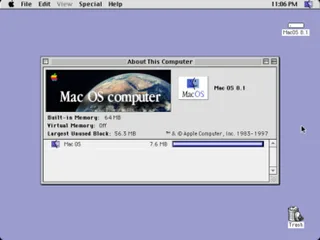
Mac OS 8.5.1
Launch OS1999
Shipped standard on the fruit-colored iMac G3 lineup.
Mac OS 8.6
Compatible1999
Widely adopted stability and performance update shortly after launch.
Mac OS 9.0
Compatible1999
Brought Sherlock 2 and multiple user support to the iMac lineup.
Mac OS 9.2.2
Max Supported2001
The officially supported classic Mac OS ceiling for these New World ROM machines.
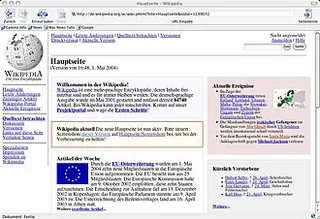
Mac OS X 10.3 Panther
Compatible2003
Could run natively on faster revisions, though performance was constrained on lower-clocked units.
Reviews & Reception
The fruit-colored iMac generation was widely praised as a confident, well-executed refinement that turned the original's cultural moment into a sustained commercial and design phenomenon.
Five delicious new colors and a real speed bump make this the iMac the first generation always deserved to be.
Apple has taken every lesson from the original iMac's success and refined it, faster, more colorful, and just as delightfully simple to set up.
The fruit-colored iMac has become a genuine pop-culture object, showing up everywhere from sitcoms to shopping malls as the face of nineties tech cool.
Improved performance addresses our biggest complaint about the original iMac, and honestly, the colors are growing on us too.