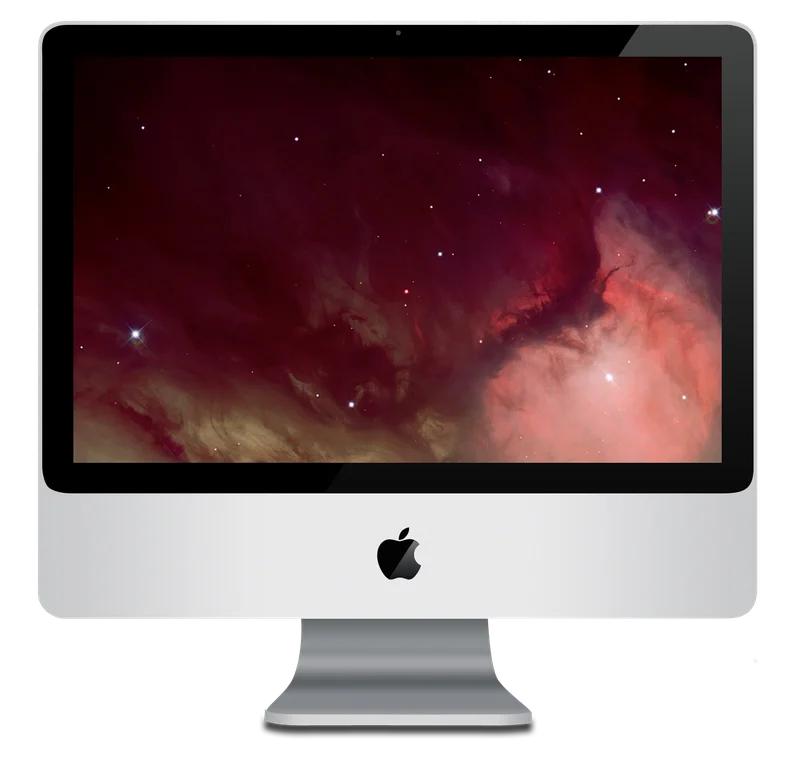
iMac 27" (Late 2009)
Introduced the massive 27-inch display and first Quad-Core iMac with i5/i7.
Apple put a 27-inch screen on an iMac in October 2009 and changed who bought one. 2560x1440, which was among the largest and sharpest displays available on any consumer machine and stayed competitive for years afterward. A 21.5-inch model sat below it. The processors moved to Intel's Nehalem Core i5 and i7, making this the first quad-core iMac. Against the Core 2 Duo machines it replaced, video editing and photo work improved sharply, and so did anything running several heavy applications at once. The chassis was reprofiled with a black bezel instead of the aluminum border, which makes a 27-inch panel read as a window rather than a slab. That look then defined the iMac for years. Target display mode over Mini DisplayPort let you plug another computer into it and use the iMac as a monitor, which is a genuinely useful thing Apple later removed and people still miss. Not everything went well. A subset of 27-inch panels shipped with a yellow tint, and Apple ran a repair and replacement program for them. This is the generation where the iMac stopped being the family computer and started being a machine professionals bought on purpose.
Mac History Timeline
Full Specifications
Availability
Processor
Memory
Storage
Display
Graphics
Expansion
Connectivity
Physical
Processor Deep Dive
Intel Core i5 / Core i7 (Nehalem/Lynnfield)
IntelThe Late 2009 27-inch iMac introduced Intel's Nehalem-based Core i5 and Core i7 desktop processors to the iMac line, bringing genuine quad-core computing, Hyper-Threading on the i7 variant, and Turbo Boost dynamic clock speeds for the first time in an iMac. This was a dramatic architectural leap over the previous Core 2 Duo generation, with far better multi-threaded performance for video encoding, professional creative applications, and heavy multitasking. It comfortably outperformed AMD's competing desktop Phenom II processors of the same period in most productivity and content-creation benchmarks. This chip generation marked Apple's decisive move away from Core 2 Duo across its higher-end desktop lineup.
Compatible Operating Systems
Mac OS X 10.6 Snow Leopard
Launch OS2009
Launched running Snow Leopard 10.6.1, tuned for the new Nehalem architecture.

Mac OS X 10.7 Lion
Compatible2011
Fully supported with strong performance from quad-core processors.
OS X 10.8 Mountain Lion
Compatible2012
Ran well on this generation's capable hardware.

OS X 10.13 High Sierra
Max Supported2017
Widely cited as the official maximum supported release for this iMac generation.
Reviews & Reception
Widely celebrated as a landmark iMac generation thanks to its huge display and quad-core power, with a display tint issue as a notable early blemish.
The 27-inch display isn't just bigger, it's genuinely one of the best screens you can buy on any computer, at any price.
Quad-core Nehalem processors finally give the iMac the horsepower to match its ambitions as a creative workstation.
A handful of early units shipped with a yellow tint issue on the display, a real blemish on an otherwise excellent machine.
Target display mode turns this into a dual-purpose machine: your computer and, when you want it, the best monitor you own.