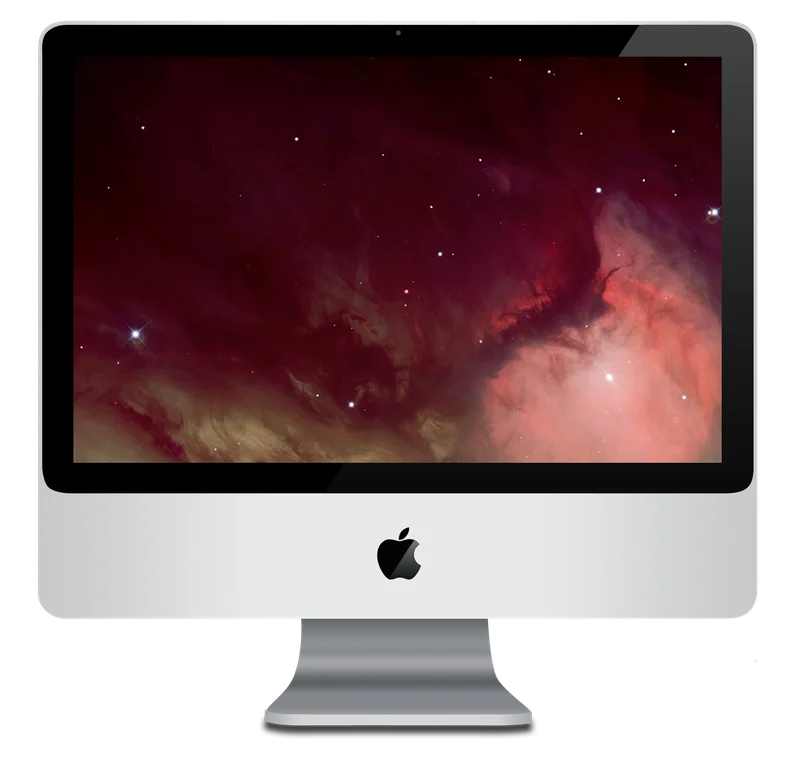
iMac (Late 2012)
Ultra-thin edge design (5mm at rim). Introduced Fusion Drive. Beautiful new design.
Apple tapered the iMac's edge to 5mm in late 2012, which looks impossible from the side and is a trick from every other angle. The machine is not thinner where the components are. There is still a bulge at the back holding the logic board and the cooling, and reviewers pointed that out while admiring it anyway. Getting even that far meant removing the optical drive and welding the aluminum enclosure with friction stir welding, a technique borrowed from aerospace. Ivy Bridge Core i5 and i7 chips from 2.7 to 3.4GHz were a modest step over Sandy Bridge, with Nvidia GeForce or GTX graphics depending on how much you spent. Fusion Drive was the clever part. A small SSD paired with a spinning disk, with software moving your frequently used files onto the flash automatically, which gave most of the feel of an SSD at hard disk prices. It lasted years. Apple also laminated the glass to the LCD, cutting reflections noticeably. Getting inside became harder, particularly on the 21.5-inch model, which annoyed the people who upgrade their own machines.
Mac History Timeline
Full Specifications
Availability
Processor
Memory
Storage
Display
Graphics
Expansion
Connectivity
Physical
Processor Deep Dive
Intel Core i5/i7 (Ivy Bridge)
IntelBuilt on Intel's 22nm Ivy Bridge microarchitecture, these quad-core chips (dual-core in some base configs) offered modest IPC gains and better integrated graphics over the prior Sandy Bridge generation while running cooler. They competed against AMD's less power-efficient FX-series desktop chips of the era, with Intel holding a clear lead in single-thread performance and efficiency. Ivy Bridge was Intel's first "tick" on the 22nm tri-gate transistor process, improving power efficiency meaningfully for an all-in-one design.
Compatible Operating Systems
OS X Mountain Lion 10.8.1
Launch OS2012
Shipped as the out-of-box operating system on the Late 2012 iMac.

OS X Mavericks 10.9
Compatible2013
Free upgrade that brought Finder tabs and better multi-display support.

OS X El Capitan 10.11
Compatible2015
Continued official support with system-level performance refinements.

macOS Sierra 10.12
Compatible2016
Added Siri and Auto Unlock to this aging but capable Ivy Bridge machine.

macOS High Sierra 10.13
Compatible2017
Introduced APFS, which this iMac's Fusion Drive configurations supported.

macOS Mojave 10.14
Compatible2018
One of the last major releases officially supporting this GPU generation.

macOS Catalina 10.15
Max Supported2019
The final Apple-supported macOS version for the Late 2012 iMac.
Reviews & Reception
Reviewers praised the striking thin-edge design and new Fusion Drive technology, with only mild reservations about reduced internal upgradeability.
The new iMac's edge is genuinely astonishing to see in person, and the laminated display eliminates the annoying glare of prior models. Fusion Drive is the real headline feature here, quietly changing how the Mac feels to use day to day.
Apple has built a stunningly thin computer, even if that thinness is mostly an illusion created by a hidden bulge. Performance gains over the 2011 model are incremental rather than dramatic.
Losing the optical drive and tightening internal access will frustrate some longtime Mac desktop users, but the resulting elegance of the machine is hard to argue with.
Fusion Drive is a genuinely clever piece of engineering that gives you SSD-like snappiness without an SSD-sized bill. It's the best reason to consider this iMac over its predecessor.