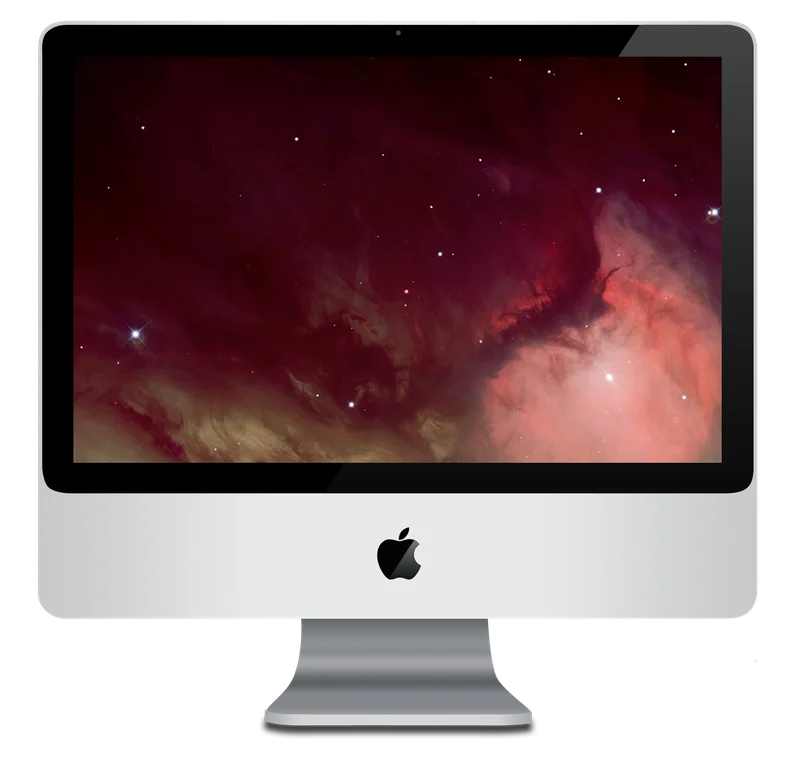
iMac (Mid 2011)
Sandy Bridge iMac with Thunderbolt. First Mac with Thunderbolt connectivity.
The Mid 2011 iMac is the first Mac with Thunderbolt, which is most of why it matters. Intel and Apple had developed the connector together, carrying PCI Express and DisplayPort over one small plug at up to 10Gbps, far past USB 2.0 and most external interfaces then available. Almost nothing existed to plug into it for a year or so, which is the usual tax on being first. Sandy Bridge Core i5 and i7 processors ran from 2.5 to 3.4GHz, with better integrated graphics, better efficiency and more performance per core than the Nehalem chips before them. AMD Radeon HD options gave the higher configurations genuine credibility for games and creative work. The iSight became a FaceTime HD camera, doubling video call resolution to match the feature Apple had put on the iPhone the year before. Everything else carried over. Same aluminum and glass, same 21.5 and 27-inch options, same glossy screen people had been arguing about since 2007, same premium over PC all-in-ones. Thunderbolt took a couple of years to matter. It then defined the Mac for a decade, and this is the machine it started on.
Mac History Timeline
Full Specifications
Availability
Processor
Memory
Storage
Display
Graphics
Expansion
Connectivity
Physical
Processor Deep Dive
Intel Core i5 / Core i7 (Sandy Bridge)
IntelSandy Bridge represented a major architectural leap for Intel, unifying the CPU and graphics processor on a single die for the first time and delivering substantial gains in both computational and integrated graphics performance compared to the previous Nehalem/Westmere generation. The 2011 iMac used quad-core Sandy Bridge Core i5 and i7 chips, paired in higher configurations with discrete AMD Radeon graphics for serious creative and gaming workloads. It comfortably outperformed AMD's competing desktop processors of the period across most productivity and content-creation benchmarks. Sandy Bridge is widely regarded by enthusiasts as one of Intel's most influential and long-lived architectures, with machines built on it remaining usable for daily computing tasks many years after release.
Compatible Operating Systems
Mac OS X 10.6 Snow Leopard
Launch OS2011
Shipped running Snow Leopard 10.6.6.

Mac OS X 10.7 Lion
Compatible2011
Released the same year and quickly adopted on this generation.

OS X 10.9 Mavericks
Compatible2013
Ran well, benefiting from Sandy Bridge's strong performance.

OS X 10.13 High Sierra
Max Supported2017
Widely cited as the official maximum supported release for this iMac generation.
Reviews & Reception
Well received as a solid, evolutionary update, with Thunderbolt's future potential generating more excitement than immediate usefulness.
Thunderbolt is the headline feature here, even though almost nothing exists yet to plug into it.
Sandy Bridge delivers a genuinely substantial performance jump over last year's iMac, especially with the discrete AMD graphics option.
The glossy display remains divisive, but the overall package is one of the best all-in-ones on the market.
FaceTime HD and a real performance bump make this an easy recommendation, Thunderbolt peripherals or not.