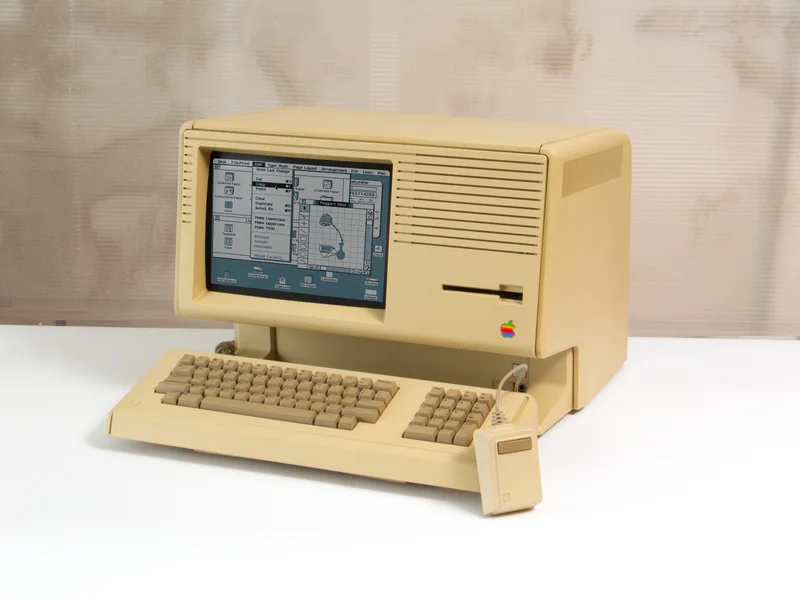
Apple Lisa 2
Revised Lisa with a single 3.5-inch floppy. Later rebranded as the Macintosh XL.
A year on from the Lisa's flop, Apple tried again. The Lisa 2 fixed the most visible problems and said little about it. Out went the twin 5.25-inch Twiggy drives, which had earned a reputation for eating disks, and in went a single 3.5-inch floppy, the format the Macintosh would carry to market weeks later. The price fell from nearly $10,000 to well under half that, which Apple never called an apology though it read like one. Underneath, little had changed. Same 5 MHz 68000, similar memory ceilings, same mouse-driven Lisa OS that reviewers had admired while buyers ignored it. You could order the machine with an external 10 MB hard drive if a floppy wasn't enough. None of it landed. The original Lisa's reputation for costing too much and running too little software had already set, and then the Macintosh arrived in January 1984 speaking most of the Lisa's own interface language for a fraction of the money. Apple sold the Lisa 2 for barely a year before absorbing it into another product entirely. What the machine did prove was the 3.5-inch floppy, which became the industry's default storage for the next fifteen years, and a company willing to revise a product fast even after writing it off. Collectors treat the Lisa 2 as the bridge between those two machines, which is more attention than it got when Apple was selling it.
Mac History Timeline
Full Specifications
Availability
Processor
Memory
Storage
Display
Graphics
Expansion
Connectivity
Physical
Processor Deep Dive
Motorola 68000
MotorolaThe same 5 MHz 68000 used in the original Lisa, prized for its clean 32-bit internal architecture that made it a natural fit for graphical, multitasking operating systems. Its flat memory addressing was a major advantage over contemporary segmented-memory chips like the Intel 8088. The 68000 would go on to anchor Apple's entire lineup for the next decade. Its enduring legacy is as the processor that made the first mainstream GUI computers technically feasible.
Compatible Operating Systems
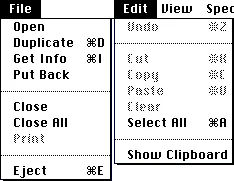
Lisa OS 2.0
Launch OS1984
Shipped with the Lisa 2, adding support for the new single 3.5-inch floppy drive.
Lisa OS 2.1
Max Supported1984
Minor refinement release addressing early reliability issues.
MacWorks
Compatible1985
Emulation layer allowing the Lisa 2 to run standard Macintosh software.
Reviews & Reception
Reviewers appreciated the Lisa 2's hardware fixes and lower price but saw it as a stopgap quickly rendered irrelevant by the Macintosh's imminent arrival.
The switch to a single 3.5-inch drive is a welcome fix, trading away redundancy for a much more dependable machine.
A better value than the original Lisa, but the imminent Macintosh makes it hard to recommend spending Lisa money at all.
Apple has quietly patched over the Lisa's worst hardware sins, though the software library remains frustratingly thin.
A capable machine overshadowed by its own sibling before it even had a chance to find its market.