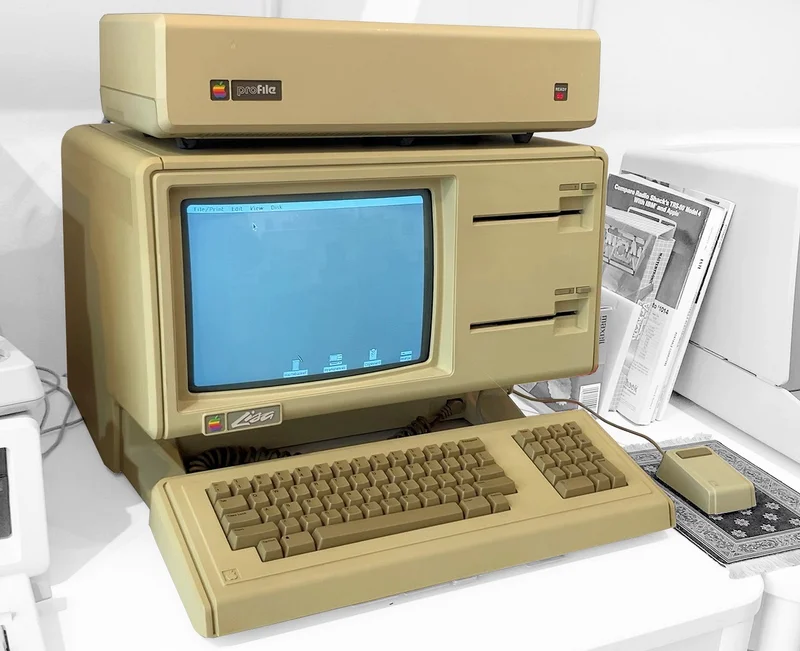
Apple Lisa
Apple's first personal computer with a GUI and mouse. Predated the Mac and heavily influenced its design. Considered a commercial failure but a technological milestone.
In January 1983 Apple shipped a computer almost nobody could afford. The Lisa cost $9,995, which in today's money runs past $25,000, and it was the first commercial machine to put a graphical interface, overlapping windows, pull-down menus and a mouse in front of paying customers. Those ideas came out of a visit Steve Jobs and his engineers made to Xerox PARC. Apple turned them into something you could actually buy. The hardware was serious for 1983. A 5 MHz Motorola 68000, a full megabyte of RAM, and an operating system doing protected memory and real multitasking years before that was normal on a desk. The bundled Lisa Office System let you cut and paste between documents and see fonts on screen roughly as they would print. WYSIWYG, people started calling it, and desktop publishing grew out of that. Businesses looked at the price, looked at the IBM PCs filling their offices at a fraction of the cost, and passed. Software houses stayed away. The 5 MHz 68000 buckled under the weight of that ambitious OS, so the machine that looked like the future often felt sluggish in front of you. Apple cut the price with the Lisa 2, then quietly recycled leftover units as the Macintosh XL. Neither worked. In 1989 the company buried thousands of unsold Lisas in a Utah landfill rather than keep servicing them. History has treated the Lisa better than 1983 did. The desktop metaphor, the trash can, drop-down menus, document-centric computing, all of it came back a year later in the Macintosh, cheap enough to sell this time, and all of it is still sitting in whatever operating system you are reading this on.
Mac History Timeline
Full Specifications
Availability
Processor
Memory
Storage
Display
Graphics
Expansion
Connectivity
Physical
Processor Deep Dive
Motorola 68000
MotorolaThe 68000 was a groundbreaking hybrid design combining a 32-bit internal architecture with a 16-bit external bus, giving it far more addressable memory and cleaner instruction handling than contemporary 8-bit chips. It powered the entire first generation of GUI-driven personal computers, from the Lisa to the original Macintosh to early Amigas and Ataris. Compared to the Intel 8088 used in the IBM PC, the 68000's flat memory model and rich instruction set made it considerably easier to program for advanced multitasking operating systems. Its legacy is enormous: the 68k family underpinned Apple's entire product line for a decade before the shift to PowerPC.
Compatible Operating Systems
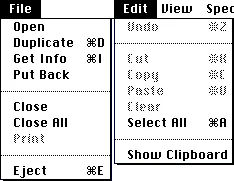
Lisa OS 1.0
Launch OS1983
Shipped with the original Lisa, featuring the pioneering Lisa Office System suite.
Lisa OS 2.0
Max Supported1984
Final major OS revision, refining stability and disk handling.
MacWorks
Compatible1984
An emulation environment that let later Lisas run genuine Macintosh software.
Reviews & Reception
Critics were dazzled by the Lisa's interface innovations but consistently flagged its high price and sluggish performance as fatal flaws for the business market it targeted.
The Lisa represents a genuine leap forward in how a person interacts with a computer, though its price will keep it out of most homes and many offices.
Remarkably intuitive once you get past the unfamiliar mouse-driven paradigm, but painfully slow when juggling several open applications.
Apple has built something that feels like the future, but at ten thousand dollars, the future remains a luxury item.
Corporate buyers we spoke with admired the Lisa's elegance but balked at retraining costs and the shortage of business software.